Shared search · Oct 18, 2026
what is social democracy? Does Bangladesh can have it in its recent geopolitical context?
What is social democracy?
Social democracy is a democratic, reformist approach that combines:
- Multiparty democracy, civil liberties, elections, and rule of law
- A market-based economy with private businesses
- Strong government action to reduce inequality through taxation and redistribution
- Universal or broad access to healthcare, education, social security, housing, and childcare
- Labour rights, trade unions, minimum wages, and workplace protections
- Regulation of corporations and markets in the public interest
Unlike revolutionary socialism, modern social democracy generally does not seek to abolish private property or capitalism. It seeks to make capitalism more equitable through democratic reform, welfare policies, and regulation 1
2.
The Nordic countries are often associated with this model, although social democracy takes different forms in different national contexts.
Can Bangladesh adopt social democracy?
Yes, Bangladesh could develop a form of social democracy—but it would need to be adapted to Bangladeshi conditions rather than copied from Scandinavia.
Bangladesh already has some ideological and constitutional foundations that could support it. The country’s constitutional principles include democracy, socialism, nationalism, and secularism; however, “socialism” in this context does not automatically mean modern social democracy 4. Bangladesh also has political organizations that explicitly describe their programmes in social-democratic terms, including commitments to social justice, education, healthcare, and gender equality
5
6.
Why it is possible
-
Existing welfare experience
Bangladesh already operates social-safety-net programmes, subsidised services, public education, and rural development initiatives. These could be expanded and made more universal. -
A large working population
Garment workers, migrant workers, agricultural labourers, and informal workers could form the social base for stronger labour protections, collective bargaining, pensions, and unemployment insurance. -
Economic growth creates fiscal space
Bangladesh’s industrialisation and export economy could eventually provide more tax revenue for public services—if tax collection improves and corruption and waste are reduced. -
Social democracy is compatible with private enterprise
Bangladesh would not need to nationalise the garment, pharmaceutical, technology, or manufacturing sectors. It could retain markets while enforcing labour standards, fair taxation, environmental rules, and social protections.
Main obstacles
1. Weak democratic institutions
Social democracy requires more than elections. It requires an independent judiciary, accountable administration, free media, credible elections, and peaceful transfer of power. Bangladesh’s history includes periods of military and one-party rule, and democratic institutions have often been fragile 4. Without institutional reform, welfare policies could become patronage or political rewards rather than universal rights.
2. Limited tax capacity
A generous welfare state requires reliable taxation. Bangladesh has a large informal economy and relatively limited direct-tax collection. A social-democratic programme would therefore need:
- More progressive income and wealth taxation
- Reduced tax evasion and illicit financial flows
- Better VAT administration
- Less dependence on regressive consumption taxes
- Transparent public spending
3. Informal employment
Many workers lack formal contracts, pensions, health insurance, or legal protection. Social democracy would need a gradual strategy: basic social protection first, followed by portable pensions, accident insurance, maternity benefits, and formalisation incentives.
4. Concentrated economic power
Business–political connections can make regulation selective. Stronger competition policy, independent regulators, transparent procurement, and protections for trade unions would be necessary.
5. Administrative capacity
Universal healthcare and education require competent local administration. Bangladesh could begin with achievable priorities—primary healthcare, nutrition, schooling, disability support, and old-age pensions—before attempting a fully Scandinavian-style welfare state.
How geopolitics affects the possibility
Bangladesh’s geopolitical position does not prevent social democracy. It may, however, shape its policy choices.
Bangladesh must balance relationships with India, China, the United States, Japan, the Gulf states, and international financial institutions. It also faces pressures involving export markets, supply chains, energy security, migration, the Rohingya crisis, and climate change.
A realistic Bangladeshi social democracy would therefore need to be:
- Economically pragmatic, preserving export competitiveness
- Non-aligned and diplomatically balanced, rather than hostile to either China or Western countries
- Focused on upgrading industries instead of relying permanently on low wages
- Designed to protect migrant workers and remittance flows
- Adapted to climate displacement, floods, cyclones, and food insecurity
- Compatible with international trade rules and development finance
For example, higher wages and better labour rights could raise production costs in the short term, but they could also improve productivity, worker stability, and Bangladesh’s reputation with global buyers.
A realistic model for Bangladesh
Rather than immediately promising a Scandinavian welfare state, Bangladesh could pursue a developmental social democracy built around:
- Universal primary healthcare and essential medicines
- Quality public education and technical training
- A national old-age and disability pension
- Stronger minimum-wage enforcement and workplace safety
- Legal recognition and protection for trade unions
- Subsidised childcare and maternity protection
- Progressive taxation and action against illicit wealth transfers
- Universal digital social-security registration
- Affordable housing and urban transport
- Climate and disaster insurance for vulnerable households
The key issue is not whether Bangladesh uses the label “social democracy.” The key question is whether it can establish democratic accountability, fair taxation, competent public institutions, and universal social rights.
Conclusion: Bangladesh can pursue social democracy, and its constitutional commitment to democracy and social justice provides some basis for doing so. But success would depend less on geopolitical alignment and more on domestic political reform, tax capacity, institutional trust, and the creation of a broad coalition among workers, farmers, the middle class, and responsible businesses.
Related
Which Nordic policies could Bangladesh realistically copy?
Bangladesh should adapt Nordic principles, not copy the entire Nordic welfare state. The most realistic policies are those that are relatively inexpensive, improve productivity, and support Bangladesh’s export competitiveness.
Policies Bangladesh could adopt first
| Nordic policy | Bangladesh version | Feasibility |
|---|---|---|
| Universal basic healthcare | Free or very low-cost primary care, maternal health, vaccinations, essential medicines, and referral services through community clinics | High |
| Universal child benefits | A simple cash benefit for children, beginning with poor households and gradually becoming broader | High–medium |
| Old-age and disability pensions | A nationally portable minimum pension, delivered digitally and linked to national identity records | High–medium |
| Active labour-market policy | Public employment services, apprenticeships, retraining, and job-matching for young people and returning migrants | High |
| Tripartite bargaining | Regular negotiation among government, employers, and workers on wages, safety, productivity, and industrial policy | High |
| Stronger collective bargaining | Independent trade unions and sector-level bargaining, beginning with garments, construction, transport, and plantations | Medium |
| Paid maternity and parental leave | Enforceable paid maternity leave, followed gradually by short, paid paternity or parental leave | Medium |
| Subsidised childcare | Affordable childcare near factories, industrial zones, and urban low-income communities | Medium |
| Flexicurity | Permit firms some flexibility to hire and restructure, but provide workers with notice, severance, retraining, and temporary income support | Medium–long term |
| Progressive public services funded by taxes | Improve tax administration first, then expand health, education, pensions, and social insurance | Long term |
Nordic systems combine welfare provision with private ownership, free markets, public pensions, labour protections, and cooperation among employers, unions, and government 1. Bangladesh could therefore pursue these policies without nationalising its major industries.
1. Start with universal primary healthcare
This is probably the most important Nordic lesson. Bangladesh should prioritise:
- Community-level doctors, nurses, and midwives
- Free maternal and child healthcare
- Essential medicines
- Emergency referral systems
- Public health insurance for catastrophic illness
- Regulation of private hospitals and medicine prices
Bangladesh should not initially promise fully free specialist healthcare. A tax-funded primary-care system would be more realistic, especially because households still face substantial direct health spending 10.
2. Build a universal social-protection floor
Bangladesh’s existing safety-net programmes should be consolidated into a single, portable social-protection system. It could provide:
- A minimum old-age pension
- Disability support
- Maternity and newborn benefits
- Employment-injury compensation
- Temporary unemployment assistance
- Emergency payments after floods, cyclones, or economic shocks
The Nordic approach is valuable because benefits are treated as social rights rather than discretionary political favours. But Bangladesh should begin with a guaranteed minimum floor, not immediately attempt Nordic-level benefit amounts. More than half of people in lower-middle-income countries remain without social-protection coverage, so expanding coverage itself is an important first step 11.
Bangladesh already has a policy foundation for this: it is described as having a developmental welfare state, although its programmes remain fragmented and uneven 4.
3. Use tripartite wage-setting
A particularly transferable Nordic policy is structured negotiation between:
- Government
- Employers
- Workers and trade unions
Bangladesh could establish permanent sectoral councils for garments, construction, agriculture, transport, and domestic work. Their responsibilities could include:
- Setting predictable minimum wages
- Revising wages transparently for inflation
- Improving factory safety
- Linking wages to productivity
- Preventing strikes and lockouts through mediation
- Coordinating skills training
This would be more realistic than imposing a very high national minimum wage without enforcement capacity. Bangladesh and the ILO are already working on labour-law reform, social dialogue, and improved labour relations 17
20.
4. Adopt a Bangladeshi version of flexicurity
The Danish-style idea of flexicurity combines a flexible labour market with income support and retraining for workers who lose jobs 28. Bangladesh could adapt it gradually:
- Require written contracts and timely wage payment.
- Make dismissal rules clear and enforceable.
- Guarantee severance or temporary income support.
- Provide retraining and job-placement services.
- Create portable benefits for workers moving between factories or sectors.
This is particularly important for Bangladesh’s garment sector as automation, climate risks, trade changes, and possible loss of preferential trade treatment alter employment conditions.
The country should not copy the full Danish model immediately. It lacks Denmark’s fiscal capacity, administrative reach, and formal employment base.
5. Expand childcare and parental leave
Nordic countries treat childcare as economic infrastructure: paid leave, subsidised childcare, and access to care help both parents remain in paid employment 26
29.
Bangladesh could begin with:
- Childcare centres in export-processing zones and large factories
- Enforceable maternity benefits
- A short, non-transferable paternity leave
- Public childcare subsidies for low-income families
- Breastfeeding and childcare facilities at workplaces
This would be especially useful for female labour-force participation. However, Bangladesh should finance it through a combination of government funds, employer contributions, and export-buyer commitments rather than relying entirely on the central budget.
6. Make education and skills genuinely universal
The Nordic model’s strongest long-term lesson is not simply free university education. It is high-quality public education connected to employment.
Bangladesh should prioritise:
- Better primary-school quality
- Teacher training and attendance monitoring
- Technical and vocational education
- Digital and English-language skills
- Apprenticeships jointly run by employers and colleges
- Retraining for workers displaced by technology
University tuition subsidies should come later. Basic education, technical training, and healthcare would produce larger social returns at Bangladesh’s current income level.
7. Reform taxation before promising Nordic benefits
Bangladesh cannot sustainably copy Nordic spending levels without a much stronger tax system. The practical sequence should be:
- Digitise tax registration and payment.
- Reduce exemptions and politically connected tax privileges.
- Improve property, corporate, and high-income tax collection.
- Reduce dependence on taxes that burden poorer consumers.
- Publish clear information on how tax revenue funds benefits.
The World Bank identifies weak domestic revenue mobilisation as one of Bangladesh’s medium-term constraints 9. Therefore, the politically credible message should be “tax reform in exchange for visible services,” not simply “higher taxes.”
Policies Bangladesh should not copy yet
Bangladesh should avoid immediately importing:
- Nordic-level overall taxation
- Very generous unemployment benefits
- Universal university subsidies
- Large public-sector employment
- Highly decentralised welfare administration
- Full sector-wide collective bargaining before unions become independent and representative
- Expensive universal childcare nationwide
- A costly universal basic income
These policies depend on high tax compliance, strong institutions, formal employment, and public trust. The Nordic model developed through long-term cooperation among government, employers, and highly organised labour—not through legislation alone 28
31.
A realistic sequence
First five years
- Universal primary healthcare package
- Digital registry for pensions and social benefits
- Employment-injury insurance
- Stronger labour inspection
- Sectoral wage councils
- Factory childcare pilots
- Apprenticeships and job-matching services
Five to ten years
- National minimum pension
- Portable health and social insurance
- Unemployment assistance
- Sectoral collective bargaining
- Expanded childcare and parental leave
- More progressive taxation
Longer term
- Broad universal social insurance
- Higher-quality public hospitals and schools
- More generous unemployment protection
- A mature flexicurity system
Bottom line: The most realistic Nordic policies for Bangladesh are primary healthcare, basic pensions, targeted child benefits, employment injury protection, tripartite wage negotiation, skills training, childcare near workplaces, and portable social insurance. Bangladesh should copy the Nordic institutional logic—universal rights, negotiation, transparency, and investment in people—rather than the Nordic spending levels.
Related
What political reforms would Bangladesh need before adopting social democracy?
Bangladesh does not need to become a wealthy Nordic country before adopting social-democratic policies. But it would need political reforms that make welfare universal, accountable, and resistant to party patronage. Otherwise, social spending could become a tool for rewarding supporters rather than a system of social rights.
Essential political reforms
1. Make elections genuinely competitive
A social democracy requires governments to be removable through elections. Bangladesh would need:
- An independent Election Commission
- Equal access to media and public spaces for competing parties
- Transparent campaign finance
- Neutral election-time administration
- Domestic and international observation
- Protection against intimidation, ballot manipulation, and politically motivated violence
Bangladesh’s past elections have been weakened by disputes over neutrality, boycotts, violence, and allegations of irregularities; elections held under neutral caretaker arrangements were generally regarded as more credible 2. The exact caretaker model may be debated, but the underlying principle is important: the incumbent government must not control the entire electoral process.
2. Limit executive power
Social-democratic welfare programmes require long-term public administration, not rule by one dominant leader or party. Reforms should include:
- A meaningful parliamentary opposition
- Stronger parliamentary committees
- Mandatory scrutiny of major spending and borrowing
- Limits on emergency powers
- Fixed procedures for appointing senior officials
- Possible term limits for the prime minister
- Constitutional checks on executive appointments
Recent reform proposals have included term limits, a bicameral legislature, clearer rights, and stronger oversight and anti-corruption institutions 1. These would help prevent the concentration of power that can undermine welfare accountability.
3. Guarantee judicial independence
Citizens must be able to challenge unlawful taxation, discrimination, corruption, and abuse by the state. Bangladesh therefore needs:
- Independent judicial appointments
- Transparent promotion and disciplinary procedures
- Adequate judicial funding
- Faster lower courts
- Protection from political interference
- An independent prosecution service
Bangladesh has experienced a major decline in judicial independence and effectiveness, according to the Atlantic Council’s assessment 1. A social-democratic state cannot reliably protect labour rights or distribute benefits fairly if courts are politically controlled.
4. Protect civil liberties and political participation
Social democracy depends on organised citizens, not only elections. Bangladesh should protect:
- Freedom of speech and journalism
- Peaceful assembly
- The right to organise politically
- Academic freedom
- Rights of religious and ethnic minorities
- Digital privacy and protection from arbitrary surveillance
- Human-rights defenders and civil-society organisations
International IDEA identifies representation, rights, and rule of law as major areas of weakness in Bangladesh’s democratic performance 5. These are not peripheral liberal ideals; they are necessary for workers, unions, journalists, and beneficiaries to hold the welfare state accountable.
5. Democratise political parties
Bangladesh’s major parties have often been highly centralised around individual leaders. Social democracy would be more viable if parties introduced:
- Regular internal elections
- Transparent membership registers
- Internal financial audits
- Candidate-selection procedures
- Term limits for key party offices
- Greater representation of women, workers, youth, minorities, and local leaders
- Clear policy platforms rather than personality-based mobilisation
Without internal party democracy, even a formally democratic welfare programme could remain controlled by narrow elites.
6. Establish serious anti-corruption institutions
Social-democratic taxation and welfare require public trust. Bangladesh would need:
- An independent Anti-Corruption Commission
- Public asset declarations for senior officials
- Transparent government procurement
- Beneficial-ownership registers for companies
- Whistle-blower protection
- Stronger investigation of illicit financial flows
- Audits of social-protection programmes
- Public disclosure of major infrastructure contracts
This matters especially because welfare programmes involve large recurring budgets. Anti-corruption reform should not be used selectively against political opponents; it must apply to governing parties, opposition parties, bureaucrats, and businesses alike.
7. Professionalise the civil service
A social-democratic programme needs a capable state. Bangladesh should move toward:
- Merit-based recruitment and promotion
- Protection for officials who resist illegal political orders
- Fixed professional standards for local administration
- Independent statistical and audit agencies
- Digital, interoperable social-benefit records
- Clear separation between party organisations and government offices
This is essential for delivering pensions, healthcare, education, and disaster assistance according to need rather than political loyalty.
8. Give local government real power
Nordic welfare states rely heavily on capable municipalities and local public institutions. Bangladesh should gradually provide elected local governments with:
- Predictable funding
- Authority over primary healthcare, sanitation, schools, and social services
- Local audit mechanisms
- Citizen participation in budgeting
- Transparent procurement
- Protection from arbitrary central-government dismissal
Decentralisation should not simply transfer corruption from Dhaka to local elites. Local autonomy must be combined with auditing, disclosure, and legal accountability.
9. Legalise effective labour representation
A social democracy needs organised labour and organised employers capable of negotiating rather than relying only on strikes, repression, or government decrees. Bangladesh should guarantee:
- Freedom to form independent unions
- Protection against retaliation for union activity
- Collective bargaining
- Sectoral wage councils
- Labour courts that function quickly
- Worker representation in occupational-safety bodies
- Formal representation for informal, migrant, domestic, and platform workers
Bangladesh’s political reforms should also ensure that employers and unions participate in policymaking through structured social dialogue.
10. Build a cross-class political settlement
Finally, social democracy needs a coalition broader than one party or one social class. Bangladesh would need political agreement among:
- Industrial workers
- Farmers and rural households
- The urban middle class
- Women’s organisations
- Small businesses
- Export-oriented employers
- Local governments
- Trade unions
- Civil-society groups
That coalition would have to agree on a gradual bargain: citizens pay more fairly into the system, while the state delivers visible and reliable services. Without such trust, tax increases will be resisted and welfare promises will lack legitimacy.
What should come first?
A realistic sequence would be:
First: democratic safeguards
- Credible elections
- Judicial independence
- Civil-liberty protections
- Parliamentary oversight
- Limits on executive power
Second: clean and capable government
- Anti-corruption reform
- Professional civil service
- Transparent procurement
- Strong audit institutions
- Decentralised but accountable administration
Third: social-democratic expansion
- Universal primary healthcare
- Minimum pensions
- Labour protections
- Child and disability benefits
- Unemployment and employment-injury insurance
- Public education and skills programmes
Bottom line: Bangladesh’s most important prerequisite is not a particular constitutional label or caretaker formula. It is a political system in which power can change hands, courts can act independently, workers can organise, public money can be audited, and citizens can demand services without belonging to the ruling party. Once those foundations are credible, Bangladesh could pursue a gradual, locally adapted social democracy.
Related
What would a Bangladeshi social-democratic party look like?
A Bangladeshi social-democratic party would probably be a moderate, pro-democracy, pro-worker, development-oriented party—not a revolutionary socialist party and not a copy of Sweden or Denmark.
Its central promise might be:
“A clean democratic state that delivers jobs, security, and dignity for working people.”
Bangladesh already has parties using “social democratic” language, including the Social Democratic Party and Bangladesh Social Democratic Party 1
5. But a genuinely competitive social-democratic force would need to distinguish itself through organisation, credibility, and delivery—not just a party label.
1. Its ideological position
The party would likely sit around the centre-left, combining:
- Competitive private markets
- Public investment in health, education, housing, and transport
- Strong labour rights
- Progressive taxation
- National economic development
- Constitutional democracy
- Secular, pluralist citizenship
- Pragmatic cooperation with business
It would not advocate abolishing private property. Instead, it would argue that markets create wealth while democratic government ensures that wealth produces decent living standards.
A useful formulation would be:
Private enterprise, public security, fair competition.
That would make it more electorally viable than a party identified with state ownership or orthodox Marxism, especially in a country whose growth remains dependent on private investment, exports, remittances, and small businesses.
2. Its economic programme
A “productive welfare state”
The party would promise welfare linked to economic development:
- Universal primary healthcare
- A minimum old-age pension
- Disability and maternity benefits
- Employment-injury insurance
- Child benefits for poor and lower-income families
- Subsidised childcare near workplaces
- Affordable housing and urban services
- Public employment and retraining during economic downturns
Bangladesh already has a substantial social-protection system, but it has evolved from emergency relief into a diverse collection of programmes addressing poverty, food insecurity, and lifecycle risks 15. A social-democratic party would campaign to unify, digitise, and make those programmes more rights-based and portable.
A jobs-first growth strategy
Its economic policy would focus less on headline GDP growth and more on:
- Better-paid manufacturing
- Export diversification beyond garments
- Support for small and medium-sized firms
- Technical education and apprenticeships
- Formalisation of informal employment
- Green industries and climate adaptation
- Reliable electricity, transport, ports, and broadband
- Stronger domestic supply chains
This would fit Bangladesh’s current challenges: the World Bank identifies weak growth, high inflation, financial-sector stress, poor domestic revenue mobilisation, export diversification, and job creation for the large youth population as major priorities 9.
3. Its tax policy
The party would need to be honest that Nordic-style services require more public revenue. It could propose:
- Better collection of income and corporate taxes
- Stronger taxation of high-value property and land gains
- Fewer special exemptions
- Digital invoicing and customs enforcement
- Action against illicit capital outflows
- Lower reliance on regressive consumption taxes over time
- Public annual reporting on how tax revenue is spent
It should avoid promising Scandinavian benefits immediately. Its message would be:
“First clean up the tax system, then visibly improve services, then ask citizens to contribute more.”
That is more credible given the World Bank’s warning about Bangladesh’s weak domestic revenue mobilisation 9.
4. Its labour platform
Workers would be central to the party, but it could not rely only on factory workers. Its coalition would include:
- Garment workers
- Transport workers
- Construction workers
- Farmers and agricultural labourers
- Domestic workers
- Migrant workers
- Informal and platform workers
- Small entrepreneurs
- Salaried professionals
Policies would include:
- Written employment contracts
- Safe workplaces
- Enforcement of minimum wages
- Freedom to form unions
- Sectoral collective bargaining
- Paid maternity leave
- Employment-injury compensation
- Portable pensions and health benefits
- Public job-matching and retraining
The party should present employers as social partners rather than automatic enemies. It could offer firms tax credits, training support, infrastructure, and predictable regulation in return for safety, formal contracts, and fair wages.
5. Its democratic-reform agenda
This would be one of its strongest points of differentiation. The party would advocate:
- An independent Election Commission
- Transparent campaign finance
- A politically neutral election-time administration
- Parliamentary oversight of the executive
- Independent courts
- Freedom of speech and association
- Stronger local government
- An independent Anti-Corruption Commission
- Public procurement transparency
- Protection for journalists and whistle-blowers
- Term limits or other safeguards against excessive executive concentration
A Bangladeshi party should be particularly careful to avoid becoming a personality cult. Existing democracy-support programmes in Bangladesh have emphasised internal party democracy, inclusion of women and youth, grassroots participation, policy development based on public opinion, and reducing political violence 4.
6. Its internal organisation
The party would need to behave differently from traditional patronage-based parties.
It should have:
- Regular internal elections
- Transparent membership records
- Published party accounts
- Independent disciplinary procedures
- Limits on the leader’s tenure
- Open candidate selection
- Local policy branches
- Women’s and youth quotas
- A workers’ council and small-business council
- A research and policy institute
- A public code against political violence and extortion
Candidates should be selected for local credibility and competence, not simply wealth or family connections.
The party could recruit from:
- Trade unions
- Student and youth movements
- NGOs and social enterprises
- Professional associations
- Local-government activists
- Women’s organisations
- Climate and disaster-resilience networks
- Small-business communities
7. Its social and cultural position
It would need to be socially inclusive without appearing hostile to Bangladesh’s religious population.
A viable position could be:
- The state is neutral among religions
- Every citizen has equal legal rights
- Religious practice is protected
- No religion or sect receives political supremacy
- Minority communities receive equal security
- Women have equal citizenship and employment rights
- Family policy should support, not police, private life
The party should avoid framing secularism as hostility to religion. It could instead use the language of equal citizenship, constitutional patriotism, and religious freedom.
8. Its likely electoral coalition
Its strongest potential coalition would be:
- Urban and peri-urban workers seeking better wages and services
- Young people seeking jobs, skills, and political voice
- Women workers seeking safety, childcare, and economic independence
- Rural households seeking healthcare, pensions, agricultural support, and climate protection
- The lower middle class seeking affordable education, transport, housing, and protection from inflation
- Small businesses seeking fair credit, reliable infrastructure, and freedom from extortion
The coalition would need to be broader than “the working class” in the industrial sense, because Bangladesh has a large informal economy and many citizens combine farming, wage work, migration, and small enterprise.
9. What it should avoid
A credible party should avoid:
- Inflated Scandinavian-style promises without a funding plan
- Nationalising successful private firms
- Treating all business as exploitative
- Promising unlimited subsidies
- Personality-based leadership
- Dependence on wealthy candidates
- Violent street politics
- Cultural contempt for religious voters
- Selective anti-corruption campaigns
- Centralising every welfare programme in Dhaka
It should also avoid trying to win by imitating the major parties’ patronage networks. That might produce short-term growth but would destroy the party’s reason for existing.
10. A possible first-term programme
A realistic first-term platform might contain ten commitments:
- Universal primary healthcare through strengthened community clinics
- A minimum pension for older people and support for people with disabilities
- Employment-injury insurance for all formal-sector workers
- A national youth skills and apprenticeship programme
- Factory and industrial-zone childcare
- Transparent sectoral wage councils
- Digital, portable social benefits linked to a secure citizen registry
- Independent anti-corruption and procurement oversight
- Election, judicial, and parliamentary reforms
- A tax-and-service compact with published revenue and spending targets
Bottom line
A Bangladeshi social-democratic party would be economically pro-development, socially protective, politically democratic, and institutionally anti-patronage.
Its distinctive identity would not be “more government” in the abstract. It would be:
A capable democratic state that protects people while helping businesses, workers, and communities become more productive.
Its greatest challenge would be proving that it can organise locally, finance its promises, remain internally democratic, and resist the clientelism that has made independent parties struggle in Bangladesh’s highly competitive and traditionally polarised party system 3.
Related
What would its manifesto look like? How could such a party win rural voters? Which countries offer the best model for Bangladesh?
1. A possible manifesto
A Fair Bangladesh: Democracy, Dignity, and Development
The party’s manifesto should be short enough for voters to remember and detailed enough to be credible. Its central promise could be:
“No family abandoned, no worker exploited, no village forgotten.”
First 100 days: restore democratic government
- Make the Election Commission genuinely independent.
- Protect freedom of speech, assembly, journalism, and peaceful political organisation.
- Strengthen parliamentary committees and publish government contracts.
- Establish independent procedures for judicial and anti-corruption appointments.
- Require annual public disclosure of politicians’ and senior officials’ assets.
- End the use of government offices and law-enforcement agencies for partisan intimidation.
- Give elected local governments predictable funding and greater authority.
This would distinguish the party from a conventional patronage machine. Party reform should also be internal: democratic candidate selection, published accounts, women’s and youth representation, and regular party conferences. These are already recognised priorities in programmes aimed at improving Bangladesh’s political parties and their relationships with constituents 5.
Jobs and productive growth
- Create a national apprenticeship and technical-skills service.
- Support small firms with credit, simpler licensing, and reliable electricity.
- Diversify exports beyond garments.
- Develop agro-processing, pharmaceuticals, light engineering, digital services, and green industries.
- Use public procurement to support Bangladeshi firms that meet labour and environmental standards.
- Establish a national employment-injury insurance scheme.
- Negotiate trade and investment agreements around technology transfer and decent work.
The party should promise better jobs rather than only more infrastructure. The World Bank identifies job creation, connectivity, pro-poor agriculture, and improved social protection as central to Bangladesh’s next phase of poverty reduction 23.
A rural social contract
- Guaranteed minimum prices or transparent price-support mechanisms for key crops.
- Public procurement from small farmers at announced prices.
- Affordable agricultural credit without political intermediaries.
- Cooperative storage, cold chains, irrigation, and processing facilities.
- Better extension services and climate-resilient seeds.
- Universal rural primary healthcare.
- Village-level maternity, nutrition, and disability services.
- Rural roads, bridges, electricity, broadband, and safe drinking water.
- A minimum old-age and disability pension.
- Temporary employment programmes after floods, cyclones, or major crop losses.
The crucial difference would be to provide reliable services and market access, not occasional gifts distributed through local political brokers.
Universal basic services
The first phase should focus on services most people use:
- Free or affordable primary healthcare
- Essential medicines at public clinics
- Universal birth registration
- Quality primary schools
- School meals in poor and climate-vulnerable areas
- Clean water, sanitation, and waste management
- Public transport and affordable housing in growing towns
- Legal aid and women’s protection services
Bangladesh’s latest child and household survey shows that progress remains uneven: only 59.2% of children under five had registered births, 50.2% of children aged 7–14 demonstrated foundational reading skills, and 85% of household members’ drinking water was contaminated with E. coli at the point of consumption 19
20.
Social protection that follows citizens
The party should consolidate Bangladesh’s many small schemes into a simpler system:
- Child benefit for low- and middle-income families
- Old-age pension
- Disability allowance
- Maternity and parental support
- Unemployment or temporary-income assistance
- Employment-injury insurance
- Emergency cash transfers after disasters
- Portable benefits for migrants and informal workers
The system should use a secure, privacy-protected national registry, but citizens must have a right to appeal exclusions. Bangladesh currently has 139 social-protection programmes, while government allocations excluding civil-service pensions were about 1.8% of GDP in FY2025 28. The manifesto should therefore promise fewer, larger, better-monitored programmes, not an uncosted explosion of benefits.
Tax and anti-corruption compact
- Publish a five-year plan to increase domestic tax collection.
- Reduce arbitrary tax exemptions.
- Tax high-value property transactions and unproductive land speculation more effectively.
- Digitise tax administration and customs.
- Publish beneficial owners of companies receiving public contracts.
- Protect whistle-blowers.
- Audit all major welfare and infrastructure programmes.
- Return a fixed share of new revenue to visible local services.
The party should state clearly: higher-quality public services require more revenue, but citizens will not be asked to pay more while corruption and political privilege remain unchecked.
Climate and disaster security
Climate policy should be treated as rural economic policy:
- Repair and maintain embankments and canals.
- Expand cyclone shelters and early-warning systems.
- Pay communities for maintenance of local resilience infrastructure.
- Provide crop, livestock, and fisheries insurance.
- Support salinity-resistant agriculture.
- Create dignified relocation and livelihood programmes for climate-displaced families.
- Make public works climate-resilient.
The World Bank reports that climate-resilient infrastructure is a major unmet need in coastal villages, while agriculture and poor households are disproportionately exposed to climate shocks 25. It also estimates that climate variability could eliminate roughly one-third of agricultural GDP by 2050 without stronger adaptation
26.
A pluralist national identity
- Equal citizenship regardless of religion, ethnicity, gender, or region.
- Protection for religious minorities and indigenous communities.
- Freedom to practise religion.
- No state discrimination based on belief.
- Women’s equal rights to education, work, property, and political participation.
- A respectful partnership with mosques, religious charities, NGOs, cooperatives, and community organisations.
The message should be equal citizenship, not hostility toward religious belief.
2. How could it win rural voters?
The party should not approach rural Bangladesh as a population waiting to be “educated” about social democracy. It should begin with the practical problems rural voters already understand.
Lead with five immediate concerns
- Fair crop prices
- Affordable healthcare
- Jobs for young people
- Protection from floods, cyclones, and crop losses
- Freedom from extortion and political intermediaries
A rural campaign slogan might be:
“Fair prices, good clinics, safe villages, decent jobs.”
Make agriculture central, not symbolic
Rural voters are not simply farmers. They may combine farming with day labour, migration, petty trade, transport, or remittances. The party should therefore offer a rural household policy, not only an agriculture policy:
- Farmer and fisher cooperatives
- Shared machinery banks
- Storage and cold-chain facilities
- Local food-processing enterprises
- Transparent fertiliser and seed distribution
- Agricultural extension through mobile services
- Affordable insurance
- Better rural marketplaces
- Recognition and protection for agricultural labourers
This would connect farmer welfare with local employment and food security.
Offer visible “first 18 months” projects
Rural voters are understandably sceptical of abstract promises. A new party should publish a map showing where it would first deliver:
- A functioning clinic in every underserved union
- Safe water points
- Repaired rural roads and bridges
- Flood shelters
- School-meal kitchens
- Digital service centres
- Agricultural storage or collection points
Every project should have a public budget, completion date, contractor, and local complaints mechanism. That makes the party’s anti-corruption message tangible.
Build village-level organisation before seeking office
It should create local branches around service, not only elections:
- Farmer associations
- Women’s savings and enterprise groups
- Youth employment clubs
- Disaster-preparedness teams
- Legal-aid desks
- Cooperative purchasing groups
- Local health and school monitoring committees
Bangladesh’s existing development experience offers a useful starting point: NGOs and community networks have played a significant role in health, education, microfinance, and social development 1
3. A political party should cooperate with civil society without trying to capture or intimidate it.
Recruit credible rural candidates
Candidates should include:
- Respected teachers
- Doctors and nurses
- Farmers and cooperative organisers
- Women’s community leaders
- Small-business owners
- Disaster volunteers
- Local lawyers and social workers
- Migrant-returnee entrepreneurs
The party should reject candidates whose main qualification is wealth or capacity for intimidation. Rural voters may tolerate established patronage networks when they seem to deliver something; a new party must offer more dependable protection and services without coercion.
Use culturally familiar language
The party should describe social democracy as:
- Nirapotta — security
- Nyaay — fairness
- Shomman — dignity
- Sheba — public service
- Shoman odhikar — equal rights
It should explain that public healthcare, pensions, agricultural support, and clean government are ways of protecting families—not imported ideological experiments.
Start locally and win credibility incrementally
A plausible route would be:
- Win union and upazila seats.
- Demonstrate competent local administration.
- Build a few strong rural constituencies.
- Form issue-based alliances where necessary.
- Expand nationally only after proving that its promises work.
Trying to contest every parliamentary seat immediately could turn the party into another candidate-collection vehicle. Its strongest asset should be a record of honest local delivery.
3. Which countries offer the best models?
No country is a complete template. The best approach would be to combine several models rather than copy one.
| Model | What Bangladesh could learn | What not to copy |
|---|---|---|
| Uruguay | Universalistic social protection, strong public services, gradual expansion, and a relatively broad social coalition. Uruguay is frequently classified among Latin America’s more comprehensive welfare systems | Its higher income, smaller population, and stronger institutional history. |
| Costa Rica | Tax-funded health and education, social insurance, and how a middle-income country can build broad services over time. Comparative research identifies Costa Rica as an unusually social-democratic Latin American case | Its geography, demographics, and historical institutions are not directly transferable. |
| Brazil | Large-scale cash transfers, participatory local governance, agricultural support, and the use of social policy to reach a very unequal society. | Highly fragmented party politics, fiscal complexity, and uneven state capacity. |
| Nordic countries | Universal benefits, collective bargaining, professional public administration, childcare, and high-trust tax-and-service systems. The Nordic model combines market capitalism with a large welfare state and collective bargaining | Bangladesh cannot immediately reproduce Nordic tax levels, labour-market formality, or administrative capacity. |
| South Korea and Taiwan | Developmental coordination, export upgrading, technical education, infrastructure, and state support for productive industry. | Their more authoritarian historical phases and industrial structures should not be treated as political models. |
| Bangladesh itself | Community health, NGO partnerships, women’s development, disaster preparedness, microfinance, and locally adapted resilience. Bangladesh’s NGO-driven development experience is widely regarded as an important part of its social-development trajectory | NGO provision should complement—not replace—accountable public services. |
The best composite model
For Bangladesh, the most useful combination would be:
- Uruguay and Costa Rica for universal basic services and social insurance
- Brazil for large-country anti-poverty programmes and rural inclusion
- Nordic countries for labour institutions, local government, and public-sector professionalism
- South Korea and Taiwan for productive industrial policy
- Bangladesh’s own NGO and disaster networks for community-level delivery and resilience
If forced to choose one closest strategic model, I would choose Costa Rica plus Uruguay, adapted to Bangladesh’s lower revenue base and much larger rural population. If choosing a development strategy rather than a welfare model, I would add South Korea and Taiwan. If choosing a method of reaching poor and climate-vulnerable households, Bangladesh’s own experience may be more relevant than any foreign example.
The resulting formula would be:
Costa Rican basic services + Uruguayan social protection + Nordic labour standards + East Asian industrial policy + Bangladeshi community resilience.
Related
How could it build a coalition with existing Bangladeshi parties?
A new social-democratic party should build a “coalition of democratic reform and social protection”, not immediately join whichever major party offers the most seats. Bangladesh’s electoral system and history reward alliances, but seat-sharing can also reduce smaller parties to satellites; recent reporting shows that several constituencies left to coalition partners were won by rival candidates 18.
1. Start with a “minimum programme”
Before negotiating with any party, it should publish five non-negotiable commitments:
- Free and credible elections
- Parliamentary and judicial independence
- Anti-corruption and transparent procurement
- Rural services, fair agricultural markets, and social protection
- Equal citizenship and protection for minorities
It could then invite parties to sign a public Democratic and Social Compact. This avoids beginning with private bargaining over ministries and constituencies.
That is especially important in a political system often criticised for family dominance, top-down decision-making, and favour-based politics 7. The new party’s value should be that it makes coalition politics more programmatic and less purely transactional.
2. The most plausible partners
BNP: a conditional governing partnership
A partnership with the Bangladesh Nationalist Party would offer the greatest electoral reach, particularly if it is the dominant centre-right force. But the social-democratic party should not simply become a BNP-aligned junior partner.
It could cooperate with BNP on:
- Electoral and constitutional reform
- Decentralisation
- Employment and industrial policy
- Infrastructure
- Rural development
- Administrative reform
- A balanced foreign policy
In return, it should seek:
- A written coalition agreement
- A fixed number of ministerial or parliamentary oversight positions
- Independent anti-corruption appointments
- Labour and social-protection legislation
- Transparent local-government funding
- Protection for civic organisations and minorities
- A ban on using the coalition to suppress internal dissent
The party should support a BNP-led government only if BNP accepts measurable institutional reforms, not merely a few symbolic cabinet posts.
National Citizen Party and other reformist groups
The National Citizen Party (NCP) and similar newer groups could be valuable partners on:
- Youth employment
- Anti-corruption
- Constitutional reform
- Digital government
- Political accountability
- Public-sector modernisation
However, alliances based only on generational identity or anti-establishment rhetoric may be unstable. The NCP’s previous reform alliance with smaller parties was dissolved within weeks when it joined a larger Jamaat-led alliance 9. The lesson is that a new social-democratic party should establish its identity and programme before entering a broad electoral bloc.
Centre-left and left parties
It should seek a policy federation with:
- Labour and socialist parties
- Progressive regional parties
- Farmers’ organisations
- Workers’ organisations
- Women’s and minority-rights groups
- Environmental and climate movements
These partners may bring fewer votes but can contribute activists, policy expertise, union links, and ideological credibility. A social-democratic party should not treat them merely as electoral decorations.
Jatiya Party: localised cooperation only
The Jatiya Party could be approached constituency by constituency, especially where it retains local organisation. But a national alliance would carry reputational risks because of its history of cooperation with successive larger parties and its internal divisions 14
15.
The social-democratic party should work with individual local candidates or factions only if they accept:
- Democratic candidate selection
- Public financial disclosure
- A clear anti-authoritarian position
- No use of political violence or patronage networks
3. Relations with Jamaat and Islamist parties
The party should distinguish between cooperation on specific policies and a formal ideological alliance.
It could cooperate with Islamist parties on:
- Disaster relief
- Anti-corruption
- Food prices
- Rural healthcare
- Small-business credit
- Social welfare
- Ethical finance
But it should not compromise on:
- Equal citizenship
- Minority protection
- Women’s constitutional rights
- Freedom of religion
- Freedom of speech
- Civilian democratic government
The current political landscape includes a major Jamaat-led alliance containing Islamist and centrist parties 6. That demonstrates the electoral usefulness of broad coalitions, but also the danger of allowing a social-democratic party’s identity to be absorbed by a bloc whose social and constitutional priorities differ substantially from its own.
A sensible rule would be:
Vote together on policies where interests overlap; do not form a permanent alliance where constitutional principles conflict.
4. A three-level coalition strategy
National level: parliamentary compact
At the national level, the party should negotiate a written agreement covering:
- The first-year legislative programme
- Parliamentary committee chairs
- Cabinet appointment procedures
- Budget priorities
- Election and judicial reforms
- Rules for resolving coalition disputes
- A mechanism for leaving the coalition
The agreement should be published in Bengali before the election. Voters should know what their vote will produce.
Constituency level: disciplined seat-sharing
The party should not contest every seat. It should:
- Identify 30–50 constituencies where it has genuine local strength.
- Conduct transparent polling and local consultations.
- Support the strongest democratic candidate in other constituencies.
- Require partner parties to withdraw competing candidates formally.
- Use a public formula based on past results, local organisation, and independent polling.
- Preserve its own party symbol where legally possible.
Coalitions fail when parties announce broad unity but leave several allies competing against each other. Seat-sharing arrangements therefore need written enforcement, dispute-resolution procedures, and local monitoring. Recent electoral reporting shows how poorly coordinated seat-sharing can benefit rival blocs 18.
Local level: coalition through service delivery
Before national office, the party could cooperate with existing parties in:
- Union and upazila councils
- Municipal governments
- Flood and cyclone preparedness
- Agricultural cooperatives
- Clinic and school monitoring
- Local procurement oversight
This would build trust without requiring premature ideological merger. It would also let the party demonstrate that cooperation produces tangible benefits for rural voters.
5. What it should offer larger parties
A small party cannot bargain only by demanding seats. It should offer larger parties things they lack:
- Credible urban professionals
- Youth and women candidates
- Policy expertise
- Labour and civil-society links
- Rural service-delivery networks
- A clean anti-corruption reputation
- Access to voters who dislike both established patronage and religious majoritarianism
Its bargaining pitch could be:
“We can help you win voters who want democracy and social security, but we will not lend you our credibility without institutional guarantees.”
6. What it must refuse
It should reject any coalition involving:
- Electoral manipulation
- Political violence
- Extortion
- Communal intimidation
- Secret seat-selling
- Suppression of journalists or civil society
- Blanket legal immunity for political leaders
- Uncosted spending promises
- Forced endorsement of a leader’s family succession
It should also avoid becoming a permanent “opposition party” with no path to government. Jatiya Party’s past role as both parliamentary opposition and government coalition participant illustrates how such arrangements can make a party look politically dependent rather than independent 14.
7. The best sequence
A realistic sequence would be:
- Year one: build the party, local branches, policy platform, and civic alliances.
- Before the election: sign issue-based agreements with reformist and centre-left groups.
- During candidate selection: contest only constituencies with credible local candidates.
- After the election: support the largest democratic bloc only through a public coalition contract.
- In government: retain a separate parliamentary identity and publish an annual coalition scorecard.
The party should aim to become the swing force between a centre-right democratic party and a fragmented centre-left, rather than trying immediately to replace every established party.
Bottom line
Its coalition formula should be:
Electoral cooperation with BNP where necessary; democratic and youth-policy cooperation with reformist groups; programmatic links with labour and left parties; localised cooperation with Jatiya Party; issue-by-issue engagement—but no automatic ideological alliance—with Islamist parties.
The party’s condition for cooperation should be simple:
No coalition without democracy, equal citizenship, clean government, and a funded social programme.
Related
What would a coalition agreement with the BNP contain? Could a social-democratic party cooperate with Jamaat-e-Islami? How could this party avoid being absorbed by larger parties?
1. What a coalition agreement with the BNP could contain
It should be a public, time-limited governing agreement, not a vague promise to “support the government.” The document should contain six parts.
A. Shared principles
The BNP and social-democratic party would agree to:
- Free, competitive elections and peaceful transfer of power
- Parliamentary supremacy and judicial independence
- Equal citizenship regardless of religion, ethnicity, gender, or region
- Protection of the press, civil society, and peaceful opposition
- Zero tolerance for political violence, extortion, land grabbing, and communal intimidation
- Recognition of the Liberation War and Bangladesh’s constitutional identity
This would give the smaller party a principled basis for cooperation while preventing it from becoming merely an appendage of the BNP.
B. A first-year legislative programme
The coalition should commit to a short list of measurable reforms, for example:
-
Election and institutional reform
- Strengthen Election Commission independence
- Reform parliamentary committees
- Establish transparent procedures for senior judicial and regulatory appointments
- Require public asset declarations by ministers and MPs
-
Anti-corruption
- Publish public contracts and beneficial ownership information
- Create an independent complaints and whistle-blower system
- Investigate extortion and political violence regardless of party affiliation
-
Economic and rural policy
- Agricultural storage and fair-price mechanisms
- Rural clinics and essential medicines
- Apprenticeships and youth employment
- Climate-resilient infrastructure
- Support for small firms and agro-processing
-
Social protection
- Consolidate overlapping allowances
- Establish transparent eligibility and appeal procedures
- Expand old-age, disability, maternity, and disaster assistance
The agreement should specify which bills will be introduced, by when, and who is responsible. The BNP’s 2026 manifesto already presents itself as a programme for a “just, humane and prosperous Bangladesh,” so the social-democratic party should negotiate to turn broad promises into dated, costed commitments 13.
C. A coalition budget
The parties should agree on a three-year fiscal framework:
- Minimum spending floors for primary healthcare, education, agriculture, and social protection
- A plan to improve tax collection without placing the main burden on low-income households
- A rule against uncosted manifesto promises
- Publication of quarterly budget-delivery reports
- Independent audits of major infrastructure and welfare programmes
The smaller party should refuse to endorse a budget unless its agreed priorities are funded.
D. Power-sharing rules
The agreement could provide:
- A limited number of cabinet positions for the social-democratic party
- Chairmanship or vice-chairmanship of relevant parliamentary committees
- Deputy-speaker or committee positions where appropriate
- Appointment of ministers based on competence rather than party loyalty
- A ban on ministers holding undisclosed business interests
- Parliamentary freedom to criticise coalition policy
Positions should be allocated according to votes, seats, expertise, and policy responsibility, not simply offered as patronage.
E. Seat-sharing before the election
The electoral agreement should state:
- Which constituencies each party will contest
- How candidates will be selected
- A deadline for withdrawing duplicate candidates
- Rules for resolving local disputes
- A commitment that the BNP will not recruit the smaller party’s candidates or local organisers after the election
- The right of each party to retain its own symbol, membership, manifesto, and parliamentary identity
Recent alliance politics show why this matters: seat-sharing disputes have produced mistrust even within larger multi-party blocs, with smaller partners objecting to unilateral decisions and inadequate consultation 26
30.
F. Enforcement and exit
The agreement needs an independent coalition council, with equal representation from both parties, to monitor implementation.
It should include:
- Monthly or quarterly meetings
- Public progress reports
- A process for handling breaches
- A right to vote against the government on issues outside the agreement
- A clear withdrawal clause
- Automatic review after 12 months
- Dissolution of the agreement if there is systematic political violence, election manipulation, communal persecution, or serious corruption
The central principle should be:
Support the government where the agreement is being implemented; oppose it where it violates the agreement.
2. Could it cooperate with Jamaat-e-Islami?
Yes, but only selectively and conditionally. There is a meaningful difference between:
- cooperation on a particular bill;
- an electoral non-aggression pact;
- a parliamentary confidence-and-supply arrangement; and
- a full governing coalition.
A social-democratic party could plausibly do the first two. The latter two would require much stronger safeguards.
Areas for possible cooperation
The parties could work together on:
- Disaster relief
- Rural healthcare
- Agricultural prices and food security
- Anti-corruption
- Youth employment
- Small-business finance
- Parliamentary accountability
- Ending extrajudicial violence
- Greater independence for MPs
Jamaat’s 2026 manifesto claims commitments to anti-corruption, human rights, merit-based recruitment, women’s representation, minority inclusion, and reform of Article 70 to give MPs greater freedom 18
20. Those stated positions create possible areas of overlap, although they would need to be tested through legislation and conduct rather than accepted at face value.
The non-negotiable conditions
Before any formal agreement, Jamaat would need to accept in writing:
- Equal citizenship for religious and ethnic minorities
- Constitutional protection for freedom of religion and belief
- Women’s equal legal and political rights
- Civilian democratic government
- The authority of elected parliament over religious or party bodies
- No religious policing or coercion
- Protection for journalists, academics, artists, and NGOs
- Rejection of political violence
- A clear and historically honest position on the 1971 Liberation War
- Independent investigation of alleged abuses by members or affiliates
The party’s contested role in 1971 and the longstanding debate over religion’s place in the state make such safeguards particularly important 17
27.
What form of cooperation is safest?
The best progression would be:
- Issue-by-issue parliamentary cooperation
- Public debates and joint committee work
- A narrowly defined confidence-and-supply agreement, if necessary
- Only then, if constitutional and rights guarantees are credible, consideration of a broader coalition
A permanent electoral alliance should be avoided unless Jamaat accepts the social-democratic party’s full democratic and equal-citizenship charter.
The party should also avoid the opposite mistake: treating every Jamaat voter as an extremist. It can engage religiously conservative voters on economic and rural issues while maintaining firm constitutional boundaries. The distinction should be between citizens and voters, who deserve representation, and political doctrines or conduct, which must be judged against democratic rights.
3. How could it avoid being absorbed by larger parties?
The danger is real. New parties often exchange their identity for seats, ministerial positions, or short-term access to power. The experience of newer parties joining larger ideological blocs illustrates how quickly an “alternative” can be perceived as merely an alliance accessory 2
8.
Keep a separate organisation
The party should retain:
- Its own constitution
- Its own membership register
- Its own fundraising
- Its own candidate-selection process
- Its own party offices
- Its own youth and women’s wings
- Its own parliamentary whip
- Its own manifesto and symbol where possible
There should be no joint membership and no automatic merger clause.
Set a maximum coalition period
Any coalition should expire after, for example, 24 months, unless renewed by the party’s elected council. Renewal should require:
- A published performance review
- A vote by the party’s national conference
- Approval by a supermajority of its executive body
- Consultation with local branches and MPs
This prevents party leaders from extending an alliance indefinitely without the membership’s consent.
Make the party’s value policy-based
The party should own a distinct political space:
- Universal basic services
- Rural social protection
- Labour rights
- Cooperative agriculture
- Progressive but practical taxation
- Equal citizenship
- Decentralisation
- Climate adaptation
- Clean government
If it becomes indistinguishable from the BNP on economics or from Jamaat on social policy, voters will have little reason to support it independently.
Contest a protected core of seats
Even within an alliance, it should contest a minimum number of constituencies—perhaps 25–40 carefully chosen seats—under its own banner. These should be places where it has:
- Strong local organisation
- Credible candidates
- Civil-society or labour networks
- A distinctive rural or urban social base
A party that never contests independently cannot measure its own strength and becomes dependent on another party’s goodwill.
Prevent candidate and cadre poaching
The coalition agreement should prohibit the larger party from:
- Recruiting the smaller party’s candidates
- Offering personal inducements to its MPs
- Taking over its local offices
- Using its activists without permission
- Fielding rival candidates against agreed nominees
- Pressuring its elected representatives to defect
Breaches should trigger financial penalties, seat-sharing revisions, or suspension of cooperation.
Diversify its social base
It should not depend on one leader, one region, or one donor network. Its internal base should include:
- Farmers and agricultural workers
- Garment and industrial workers
- Women’s organisations
- Youth and students
- Small businesses
- Climate-affected communities
- Religious minorities
- Professionals and civil-society activists
- Migrant and remittance-dependent families
A broad membership gives the party bargaining power that cannot be replaced by one leader’s relationship with BNP or Jamaat.
Keep an independent public voice
Coalition MPs should be allowed to:
- Vote against the government on non-agreed issues
- Publish alternative budget proposals
- Criticise ministers publicly
- Maintain separate media events
- Hold constituency consultations
- Issue an annual “coalition scorecard”
The party should explain its position in one sentence:
“We are in coalition to deliver our programme, not to surrender our identity.”
Recommended strategy
The safest overall approach would be:
- With BNP: a written, conditional governing agreement focused on democratic reform, rural development, and social protection.
- With Jamaat: issue-by-issue cooperation, with no permanent alliance unless equal citizenship, women’s rights, minority protection, and democratic constitutionalism are explicitly guaranteed.
- Internally: preserve separate organisation, finances, candidates, symbols, parliamentary discipline, and a protected number of constituencies.
The party’s survival would depend on making coalition participation conditional, measurable, reversible, and publicly accountable.
Related
Now assess the potential social democratic party opportunities in Bangladesh; following our previous conversations. And how they can kick start political activities?
Strategic assessment
A social-democratic party still has a viable opening, but not as another protest party or as a small ideological faction. Bangladesh’s 2024 uprising broke the previous political monopoly and created demand for new political models, yet the post-uprising field has become fragmented and competitive 5
10. The 2026 election then consolidated the BNP as the dominant governing force, while Jamaat-e-Islami became the principal parliamentary opposition; this makes immediate nationwide electoral competition difficult but creates space for a disciplined, policy-focused third force
29
30.
The party’s opportunity is to represent voters who want:
- Democracy without dynastic or authoritarian politics
- Social protection without religious majoritarianism
- Economic growth with decent employment
- National identity without political extremism
- Reform without permanent street confrontation
- Coalition participation without absorption
Its clearest positioning would be:
A democratic, patriotic, pluralist party of jobs, public services, clean government, and social security.
Where the opportunity is strongest
1. The cost-of-living and employment agenda
Inflation, weak investment, financial-sector problems, energy costs, and limited job creation are creating an opening for a party that speaks about everyday economic security rather than only constitutional reform. CPD identifies elevated inflation, banking-sector weakness, depressed investment, and constrained SME employment as major current pressures 35. The ILO similarly highlights inflation, foreign-exchange vulnerabilities, informality, underemployment, and Bangladesh’s transition from least-developed-country status
38.
The party should make its economic offer concrete:
- A national youth employment and apprenticeship programme
- Support for small businesses and cooperatives
- Food-price stabilisation and agricultural storage
- Stronger labour inspection and wage protection
- Universal primary healthcare
- Portable social-security benefits for informal workers
- Affordable transport and energy
- Investment in climate-resilient infrastructure
Jobs and prices should be the party’s main entry point—not “social democracy” as an abstract label.
2. Young voters beyond student politics
Nearly half of Bangladesh’s population is under 25, and almost one-third of eligible voters are under 35, according to a government social-protection workshop report 36. Youth unemployment, skills mismatch, outdated curricula, and weak education–industry links were identified by young participants as central problems
34.
The party should recruit young people not merely as marchers, online volunteers, or campaign crowds, but as:
- Local organisers
- Policy researchers
- Candidates
- Community mediators
- Digital campaign managers
- Members of internal decision-making bodies
Its youth programme should include a Youth Guarantee:
- A job, apprenticeship, funded skills placement, or further-education opportunity within a defined period after leaving education.
- Transparent recruitment into public programmes.
- Public reporting on the number of placements and completion rates.
3. A pluralist alternative to the BNP–Jamaat axis
The BNP’s parliamentary dominance makes it difficult for a new party to challenge it directly in the short term 24
29. Meanwhile, the Jamaat-led alliance’s expansion demonstrates that a disciplined ideological network can convert organisational strength into parliamentary influence
1
2.
This creates a space for a party that is:
- Democratic but not merely anti-BNP
- Religious-freedom-oriented but not anti-religion
- Socially progressive but culturally respectful
- Nationalist but not exclusionary
- Reformist but economically practical
The party should avoid defining itself only as “the alternative to Jamaat” or “the alternative to BNP.” It needs a positive social base and programme.
4. Rural and peri-urban politics
New parties commonly concentrate in Dhaka, universities, and digital networks. Their weakness is often the absence of durable local organisation. A social-democratic party can differentiate itself through:
- Farmers’ associations
- Garment and transport workers
- Rural women’s groups
- Remittance-dependent households
- Climate-affected communities
- Small traders
- Informal workers
- Upazila-level public-service campaigns
The strongest initial base may be peri-urban Bangladesh, where voters experience both rural insecurity and urban employment pressures.
5. Women, minorities, and politically underrepresented groups
The party can build trust by making internal representation visible rather than rhetorical:
- At least one-third women in all elected committees from the beginning
- Reserved leadership positions for young members
- Minority and indigenous representation in local committees
- A public anti-harassment and safeguarding policy
- Candidate quotas linked to actual winnable seats, not symbolic nominations
This would give substance to its commitment to equal citizenship and distinguish it from male-dominated patronage structures.
The main risks
Absorption by the BNP
A BNP government may offer cooperation, appointments, or constituency arrangements. That can provide access but also make the new party look like a junior partner. The party should cooperate only through a published policy contract, retain its own candidates and organisation, and preserve the right to criticise the government.
Being pulled toward Jamaat
Jamaat’s electoral and organisational strength makes selective parliamentary cooperation possible, but a permanent alliance could alienate pluralist, minority, women, and liberal voters. Cooperation should therefore be restricted to specific legislation unless Jamaat accepts enforceable guarantees on equal citizenship, women’s rights, religious freedom, and political nonviolence.
Becoming another elite project
A party founded by professionals or diaspora figures will fail if it looks like a Dhaka-based policy club. It needs local organisers, member-funded activities, transparent accounts, and candidates with community roots.
Fragmentation
Bangladesh’s post-uprising environment has seen a proliferation of new parties, but analysts warn that fragmentation can create instability and allow established actors to manipulate smaller groups 10
15. The party should therefore prioritise organisational depth over rapid national branding.
Overpromising
A new party should publish costed proposals. Voters are unlikely to trust another manifesto promising jobs, welfare, lower prices, and corruption-free government without explaining funding and implementation.
How to kick-start political activities
Phase 1: First 30 days — establish the political proposition
Create a small founding secretariat with responsibility for:
- Organisation
- Policy
- Communications
- Legal compliance
- Finance
- Membership
- Safeguarding
- Local government and community programmes
Then publish a short Founding Charter, no longer than 10 pages, covering:
- Democratic constitutionalism
- Equal citizenship
- Social protection
- Jobs and industrial development
- Rural transformation
- Decentralisation
- Anti-corruption
- Environmental and climate resilience
- Internal party democracy
- Nonviolence
Do not begin with a large rally. Begin with a clear offer that citizens and journalists can examine.
Phase 2: Days 30–90 — listen before recruiting
Conduct a national listening programme in perhaps 12–15 districts, using public meetings and structured interviews.
Ask residents:
- What is the largest household expense?
- What prevents young people from finding work?
- Which public service fails most often?
- What makes people afraid to participate in politics?
- Which local problem could be solved within one year?
- What would make them trust a new party?
The results should produce a People’s Priorities Report with district-level findings. This prevents the party from imposing a Dhaka-centric agenda.
The first meetings should focus on:
- Youth employment
- Food and agricultural prices
- Local healthcare
- Women’s safety and employment
- Climate and flood resilience
- Corruption in public services
Phase 3: Days 60–120 — build local cells
Start with a limited number of pilot districts rather than claiming nationwide coverage. Each local unit should have:
- A convenor
- A treasurer
- A women’s organiser
- A youth organiser
- A policy and grievance officer
- A safeguarding focal point
Every local unit should maintain:
- A public membership register, subject to privacy law
- Monthly meeting minutes
- A basic income-and-expense statement
- A list of local problems being tracked
- A code of conduct
The party should aim first for credible presence in 20–30 constituencies, not superficial committees everywhere.
Phase 4: Launch practical public-service campaigns
The party should earn recognition through nonviolent, legal community work:
- Price and medicine monitoring
- Flood-preparedness mapping
- Legal-aid referral clinics
- Public-school and clinic scorecards
- Blood-donation drives
- Job and apprenticeship information fairs
- Consumer-rights campaigns
- Assistance accessing government benefits
These activities must not become disguised vote-buying. Publish the funding sources and eligibility rules, and avoid distributing cash or partisan relief.
A useful campaign identity would be:
“Politics that solves one problem before promising ten.”
Phase 5: Recruit credible local leaders
Recruitment should prioritise:
- Teachers
- Doctors and nurses
- Farmers’ organisers
- Labour leaders
- Small-business owners
- Women’s community leaders
- Lawyers
- Engineers
- Climate and disaster volunteers
- Clean local government representatives
Avoid recruiting large numbers of established politicians in the first year. They may bring networks, but they also bring factional habits, allegations, and pressure to turn the party into an electoral vehicle.
Every prospective candidate should undergo:
- Asset and liability disclosure
- Criminal-case disclosure
- Conflict-of-interest review
- Public interview
- Local-member vote or primary-style selection
- Agreement to a party code of conduct
Institutional preparation
The party should seek formal Election Commission registration early. The EC’s rules require documentation such as the constitution, manifesto, executive committee, party symbol and flag, bank information, and funding records 16
17. Registration eligibility can be established through electoral performance or organisational requirements, including a central office, district-level organisation, or a minimum number of registered voter members in qualifying local units
17
21.
Its constitution should go beyond legal minimums and require:
- Regular internal elections
- Term limits for the party chair
- Independent audit
- Public donor disclosure above a defined threshold
- One-member-one-vote candidate selection
- Women’s representation
- Disciplinary due process
- A ban on officeholders using party positions for private business
- An independent ethics committee
Communications strategy
The party should communicate in three layers:
One sentence
We will build a democratic Bangladesh where every family can find secure work, access basic services, and live as an equal citizen.
Three promises
- Jobs and livelihoods
- Clean and accountable government
- Universal basic services
Five proof points
Every policy announcement should answer:
- What problem does it solve?
- Who benefits?
- How much will it cost?
- How will it be funded?
- How will citizens monitor delivery?
Use Bangla as the principal language, with regional examples and short videos explaining policies. Social media should support physical organisation, not substitute for it.
Coalition policy after launch
For the first year, the party should remain organisationally independent and electorally flexible.
- With the BNP: maintain a conditional dialogue on democratic reform, jobs, decentralisation, and social protection.
- With Jamaat: cooperate selectively in parliament or on community issues, but do not accept an automatic alliance.
- With left, labour, youth, women’s, and minority organisations: build a broad social-democratic civic network, even where formal electoral cooperation is premature.
- With other new parties: cooperate on electoral reform, political finance, and protection of civic space.
Any future coalition should require approval by the party’s national council and be based on a public written agreement.
A realistic three-year target
First year
- EC registration or compliance preparation
- 20–30 functioning constituency organisations
- 50,000–100,000 verified members and supporters
- A national policy platform
- At least 10 public-service campaigns
- A trained pool of local organisers and candidates
Second year
- Local government participation where feasible
- Shadow budgets and constituency scorecards
- Candidate selection in a protected core of constituencies
- Formal cooperation with labour, farmers’, women’s, youth, and minority networks
- Annual party congress with contested internal elections
Third year
- Contest a limited number of seats under its own identity
- Negotiate seat-sharing only where it strengthens—not replaces—the party
- Publish a coalition red-line document
- Measure vote share, membership retention, women’s representation, and local issue outcomes
Overall judgment
The opportunity is real but narrow. A new social-democratic party is unlikely to become a national governing force immediately, especially after the BNP’s 2026 parliamentary dominance. Its near-term objective should instead be to become a credible organised centre-left force with a recognisable social base.
Its winning formula would be:
Economic security + democratic reform + equal citizenship + disciplined local organisation.
It should begin not by announcing a grand national alliance, but by building trust, members, local problem-solving capacity, and a distinct policy identity. If it can do that, it could become a coalition partner without becoming a satellite—and eventually compete as a national party in its own right.
Related
What should the party’s founding manifesto say? Which districts and constituencies should it prioritise first? What organisational structure and leadership model should it adopt? Explore
complete the previous task
A founding plan for a Bangladeshi social-democratic party
The party should launch as a democratic, pluralist, economically practical and locally rooted movement—not as a personality vehicle, an anti-government protest platform, or a copy of an existing left party.
Its founding proposition should be:
A Bangladesh where democracy delivers decent work, public services, equal citizenship and accountable government.
The party should initially aim to become a credible organised third force, not claim immediate national dominance. The 2026 election environment was highly competitive and concentrated around major blocs, while unemployment, corruption, governance and youth aspirations remained central political issues 25. A new party therefore needs organisational depth before seeking a large number of parliamentary seats.
1. What the founding manifesto should say
Proposed title
The People’s Bangladesh: A Democratic Social Contract for Work, Justice and Dignity
The manifesto should be short—perhaps 25–35 pages in Bangla—with a one-page summary, costed first-year priorities and measurable targets. It should avoid abstract ideological language and explain how each promise will be financed and implemented.
Preamble
Bangladesh belongs equally to all its citizens.
The state must serve the people, not parties, families, business syndicates or religious majorities.
We believe in democracy, national sovereignty, pluralism, social justice, a regulated mixed economy and equal rights under law.
We will build a country where political disagreement does not mean persecution, where economic growth produces secure livelihoods, and where public office is a responsibility rather than private property.
The manifesto should explicitly reject:
- Authoritarian rule
- Political violence
- Religious discrimination
- Personality cults
- Dynastic control
- Corruption and extortion
- Arbitrary detention and collective punishment
- Capture of state institutions by any party
The ten founding commitments
1. Democratic government and constitutional accountability
The party should promise:
- Free, competitive and credible elections
- An Election Commission with secure institutional independence
- Parliamentary committees with real investigative powers
- Stronger protection for judicial independence
- Public disclosure of political-party funding
- Access to information and open government
- Protection for peaceful assembly, association and expression
- No use of police, administration or intelligence agencies for partisan retaliation
- Time-bound investigations into political violence, regardless of the perpetrator’s affiliation
The party should support institutional reform, but avoid promising every possible reform at once. The public should understand the first three priorities:
- Election integrity
- Rule of law
- Accountability for public office
2. Equal citizenship and national pluralism
The party should define Bangladeshi patriotism as equal belonging, not religious or ethnic uniformity.
It should guarantee:
- Equal protection for Muslims, Hindus, Buddhists, Christians, indigenous peoples, atheists and other citizens
- Protection of religious and minority places of worship
- Investigation and prosecution of communal attacks
- Representation of minorities and indigenous peoples in public institutions
- Legal protection against hate crimes and incitement
- Cultural and linguistic rights for indigenous communities
- Political participation for persons with disabilities and gender minorities
This is a major differentiator. The party should be respectful of religious belief while making clear that no religious or political organisation is above the Constitution and law.
3. Jobs, wages and economic security
This should be the manifesto’s central chapter. Bangladesh faces a particularly serious youth-employment challenge: youth unemployment is estimated at 16.8%, while 30.9% of young people are not in employment, education or training; the figures are substantially worse for young women 21.
The party should propose a Bangladesh Youth Guarantee:
- Every young person aged 18–29 receives a job, paid apprenticeship, accredited skills placement, enterprise support or further-education opportunity within 12 months of registration.
- Placements must be paid where they involve work.
- Outcomes must be published by district and gender.
- Programmes must not be controlled through party membership.
Additional commitments:
- A national apprenticeship system jointly designed with employers and trade unions
- Skills training linked to actual vacancies
- Recognition of overseas qualifications and skills
- Support for small and medium-sized businesses
- Low-cost credit for productive enterprises, cooperatives and women-owned businesses
- Stronger enforcement of labour safety and wage laws
- Social insurance for informal and platform workers
- Protection for migrant workers from recruitment fraud
- Economic diversification beyond garments, remittances and construction
The party should not promise a government job for every graduate. It should promise a pathway to work, skills or enterprise, with measurable public targets.
4. A productive mixed economy
The party should define social democracy as neither unrestricted capitalism nor blanket state ownership.
It should support:
- Private enterprise and entrepreneurship
- Public ownership where strategic or essential
- Competitive markets
- Regulation of monopolies and cartels
- Public investment in infrastructure and human capital
- Worker participation and collective bargaining
- Cooperatives in agriculture, fisheries and services
- Transparent public procurement
- Independent regulation of banks, utilities and essential services
Its economic test should be:
Does this policy create productive employment, reduce insecurity, improve productivity and distribute opportunity fairly?
The manifesto should include a five-year economic diversification plan focused on:
- Pharmaceuticals
- Agro-processing
- Light engineering
- Information technology and digital services
- Renewable energy
- Logistics
- Shipbuilding and maritime industries
- Climate-resilient construction
- Higher-value garments and textiles
5. Universal basic services
The party should promise a floor of dignity, not unlimited benefits without funding.
Initial priorities:
- Primary healthcare free at the point of use
- Essential medicines available at public facilities
- Universal school meals in poverty-affected areas
- Improved teacher recruitment and attendance
- Technical and vocational education linked to local economies
- Clean water and sanitation
- Affordable public transport
- Digital access in schools, clinics and local government offices
- Disability support and rehabilitation
- A national social-care policy for older people
The manifesto should identify a small package of universal guarantees and a second tier of targeted benefits for poorer households.
6. Social protection that reaches people
Social protection should be based on transparent eligibility rather than party patronage.
The party should establish:
- A unified, privacy-protected social registry
- Direct payment systems with multiple access options
- Independent grievance and appeals mechanisms
- Benefits for widows, persons with disabilities, vulnerable children and elderly people
- Emergency support after floods, cyclones and livelihood shocks
- Portable benefits for migrant, informal and seasonal workers
- Public reporting on excluded and included households
The party should specifically avoid making politically attractive but fiscally unrealistic universal cash promises.
7. Rural transformation and food security
Agricultural policy should move beyond subsidies announced during election periods.
Commitments should include:
- Fair farm-gate prices
- Public storage and cold-chain investment
- Affordable agricultural inputs
- Better rural roads and transport
- Irrigation and water management
- Agricultural extension services
- Support for producer cooperatives
- Fisheries and livestock protection
- Land and tenancy dispute services
- Women’s access to land, credit and agricultural training
The objective should be higher rural incomes, not simply higher production.
8. Women’s freedom, safety and economic power
The party should promise:
- Safe public transport and workplaces
- Faster investigation of gender-based violence
- Legal aid and survivor support
- Childcare attached to public workplaces and industrial zones
- Equal pay and labour protections
- Women’s access to credit, land and business registration
- More women in elected and party leadership
- Protection against online abuse and political harassment
Women should not appear in the manifesto only as beneficiaries. They should be presented as workers, entrepreneurs, organisers, candidates and decision-makers.
9. Climate resilience and planned migration
Climate vulnerability is not an environmental side issue. Bangladesh’s agriculture, fisheries and rural livelihoods face major displacement risks, while climate migration increases pressure on urban labour markets 18.
The party should propose:
- Climate-resilient embankments and drainage
- Cyclone shelters and local warning systems
- Salt-tolerant and flood-resilient agriculture
- Urban housing and services for climate migrants
- Legal protection for displaced families
- A national plan for climate-related employment
- Relocation and compensation rules developed with affected communities
- Renewable-energy expansion
- Transparent climate-finance management
10. Clean government and decentralisation
The party should make local government central to its identity.
It should support:
- Greater fiscal authority for elected local government
- Direct publication of local budgets
- Participatory budgeting in selected municipalities
- Public procurement databases
- Asset declarations for senior officeholders
- Whistleblower protection
- Stronger anti-corruption investigations
- Service-delivery scorecards
- Independent audit of major infrastructure projects
- Citizen complaints resolved within statutory deadlines
A simple promise would be:
Every local government will publish what it receives, what it spends and what it delivers.
2. Manifesto red lines
The founding document should contain a short “non-negotiable principles” section.
The party should never:
- Enter an alliance that requires abandoning equal citizenship
- Support political violence or retaliatory persecution
- Accept undisclosed corporate, foreign or criminal funding
- Nominate candidates who conceal assets or serious criminal allegations
- Use relief, jobs or public services to buy votes
- Permit one leader to control nominations, finance and discipline
- Allow party members to command unauthorised armed or coercive groups
- Trade away women’s rights or minority protection for electoral convenience
These rules matter because a new party’s credibility will be built more by what it refuses to do than by the number of promises in its manifesto.
3. Which districts should it prioritise?
The party should not initially attempt to build equal strength across all 64 districts. It should use a three-tier territorial strategy:
- Tier 1: launch districts with a realistic prospect of building a visible organisation
- Tier 2: strategic expansion districts linked to particular social constituencies
- Tier 3: national presence through coordinators, not full electoral structures
The first objective should be 20–30 serious constituency organisations, not 300 weak committees.
Tier 1: first-wave districts
Dhaka district and metropolitan Dhaka
Why prioritise it:
- Concentration of students, professionals, media, civil-society networks and organised labour
- Visibility for a new party
- Large population of renters, informal workers and young jobseekers
- Ability to recruit policy, legal, digital and communications talent
Risks:
- The party could become an elite Dhaka project
- Constituencies are expensive and politically crowded
- Online visibility may be mistaken for grassroots strength
Suggested focus: Dhaka North/South urban constituencies, Savar and Keraniganj, but with separate strategies for residents, workers and peripheral settlements.
Dhaka should be the party’s administrative and policy centre, not its only social base.
Gazipur
Why prioritise it:
- Major industrial and garment workforce
- Young migrant population
- Strong connection between labour rights, women’s employment, housing, transport and pollution
- An ideal setting for a social-democratic jobs platform
The party should work with workers and residents through legal civic campaigns, not create partisan fronts inside workplaces.
Narayanganj
Why prioritise it:
- Industrial, trading and transport economy
- Dense urban and peri-urban communities
- Clear issues around labour, river pollution, congestion, land and local government
- Potential base among small entrepreneurs and industrial workers
Chattogram
Why prioritise it:
- Port, logistics, commerce, industry and migrant-worker economy
- Major urban population and strategic national importance
- Opportunity to develop a platform around jobs, transport, housing, port governance and environmental protection
Chattogram should have a degree of organisational autonomy because its economic and political interests differ significantly from Dhaka.
Cumilla
Why prioritise it:
- Important transport and commercial corridor
- Mix of urban, rural, agricultural and migrant-household voters
- Potential bridge between national economic policy and district-level livelihood concerns
Mymensingh
Why prioritise it:
- Large student and education presence
- Agriculture and rural-service issues
- Opportunity to combine youth employment, education and rural development
- A useful base for expanding northward
Rajshahi
Why prioritise it:
- Education-oriented urban population
- Agricultural and climate-related concerns
- Potential support for clean government, public services and evidence-based politics
Rajshahi would suit a policy-oriented social-democratic message, but the party would need strong local organisers rather than relying on universities alone.
Tier 2: strategic expansion districts
Khulna and Jashore
These districts combine urban employment, industry, agriculture, migration and climate vulnerability. Khulna is particularly relevant for a programme addressing salinity, water management, industrial transition and climate migration.
Barishal and Patuakhali
These areas are useful for building a coastal development platform around:
- Cyclone resilience
- Fisheries
- Agriculture
- Migration
- Public transport
- Rural health and education
The party should not treat coastal voters only as disaster victims. The message should be productive coastal development and secure livelihoods.
Rangpur and Dinajpur
These districts offer opportunities around:
- Rural poverty and employment
- Agricultural value chains
- Seasonal migration
- Food security
- Youth skills and local enterprise
They are important for preventing the party from being labelled an urban middle-class movement.
Sylhet and Moulvibazar
These districts have strong diaspora and remittance connections. The party could focus on:
- Migrant-worker rights
- Recruitment transparency
- Investment of remittances
- Local health and education
- Tourism and environmental protection
- Small-business development
Noakhali, Feni and Lakshmipur
These areas combine migration, remittances, agriculture, commerce and coastal vulnerability. The party should develop a practical platform on household income security and local infrastructure.
Bogura and Pabna
These districts offer a useful combination of agriculture, small industry, education and transport links. They could become important centres for a rural–small-business social-democratic coalition.
4. Which constituencies should it prioritise?
It is too early to designate “safe” constituencies without verified local polling, candidate research and constituency-level election data. The Election Commission publishes constituency information, and the 2026 constituency results can be examined down to local levels through election-data projects 27
28. The party should therefore choose constituencies through a transparent scoring system rather than personal preference.
Recommended first-wave constituency types
A. Industrial-worker constituencies
Examples to investigate:
- Gazipur urban and industrial constituencies
- Savar
- Narayanganj
- Chattogram industrial and port-adjacent areas
- Dhaka peripheral industrial belts
Core message: decent work, safe factories, affordable housing, transport, childcare and social insurance.
B. Youth and education constituencies
Examples to investigate:
- Dhaka university and professional-education areas
- Rajshahi urban constituencies
- Mymensingh urban constituencies
- Chattogram urban constituencies
- Cumilla urban areas
Core message: jobs, skills, public services, digital freedom and democratic accountability.
C. Climate-exposed constituencies
Examples to investigate:
- Khulna coastal belt
- Barishal
- Patuakhali
- Bhola
- Satkhira
- Noakhali and Lakshmipur coastal areas
Core message: climate security, resilient infrastructure, fisheries, agricultural protection and planned migration.
D. Rural–small-business constituencies
Examples to investigate:
- Bogura
- Pabna
- Jashore
- Cumilla
- Rangpur
- Dinajpur
Core message: farm prices, local enterprise, roads, health, education and access to credit.
E. Diaspora and remittance constituencies
Examples to investigate:
- Sylhet
- Moulvibazar
- Noakhali
- Feni
- Cumilla
- Chandpur
Core message: safe migration, lower recruitment costs, remittance investment, family services and local development.
A constituency selection scorecard
Each prospective constituency should receive a score out of 100:
| Criterion | Weight |
|---|---|
| Existing credible local organiser | 20 |
| Demonstrable membership and volunteer base | 15 |
| Local issue fit with manifesto | 15 |
| Candidate integrity and community credibility | 15 |
| Youth and women’s participation potential | 10 |
| Electoral competitiveness | 10 |
| Organisational sustainability after election | 10 |
| Media and communications feasibility | 5 |
A constituency should not become a first-wave target merely because:
- A wealthy person wants the nomination
- A celebrity is available
- The party has many social-media followers there
- An influential politician promises to join
- A national leader has a family connection there
Three types of electoral candidacy
The party should classify seats into:
1. Build seats
The party contests to establish identity and organisation, even without expecting victory.
2. Win-capable seats
The party has a strong candidate, local organisation, issue advantage and plausible path to victory.
3. Coalition or coordination seats
The party may negotiate with another democratic party, but only through a public agreement and without dissolving its local organisation.
In the first election, it would be better to contest 30–50 carefully selected constituencies than to nominate weak candidates nationwide.
5. Recommended organisational structure
The organisation should combine internal democracy, professional competence and local autonomy.
A. Founding Congress
The highest authority should be an annual or biennial National Congress composed of:
- Elected local delegates
- Constituency representatives
- Women’s delegates
- Youth delegates
- Worker and informal-sector representatives
- Minority and indigenous representatives
- Members of parliament, where applicable
- Party officeholders
The Congress should:
- Approve or amend the manifesto
- Elect the national leadership
- Approve audited accounts
- Elect the ethics and elections commissions
- Debate coalition agreements
- Review the leadership’s performance
The founding congress should not simply acclaim a predetermined executive committee. Even during the founding phase, there should be contested elections for at least some positions.
B. National Council
A National Council of perhaps 100–150 members should meet quarterly or at least three times a year.
It should:
- Review the executive committee
- Approve major policy changes
- Authorise electoral alliances
- Monitor party finance
- Resolve disputes between regional units
- Receive reports from independent party bodies
The Council should be large enough to represent the country but small enough to function.
C. National Executive Committee
The executive should be limited to approximately 25–35 members, with defined portfolios:
- President or chair
- General secretary
- Treasurer
- Organisation secretary
- Policy and research secretary
- Communications secretary
- Legal and constitutional affairs secretary
- Local government secretary
- Labour and livelihoods secretary
- Youth secretary
- Women’s equality secretary
- Minority and indigenous affairs secretary
- Climate and environment secretary
- Diaspora and migrant affairs secretary
- Digital membership secretary
- Safeguarding and ethics secretary
Each post should have published responsibilities and quarterly performance reporting.
D. A dual leadership model
The party should adopt a chair–general secretary model:
Chair or president
- Represents the party nationally
- Protects the party’s constitutional principles
- Chairs the National Council and Congress
- Acts as an external statesperson
- Does not control day-to-day finance or nominations
General secretary
- Runs daily political and organisational operations
- Supervises the secretariat
- Coordinates district units
- Executes decisions of the Congress and Council
- Reports publicly on organisational performance
This separation reduces the danger of one-person domination.
E. Term limits and rotation
The party should adopt:
- Maximum two consecutive terms for chair
- Maximum two consecutive terms for general secretary
- No more than three consecutive terms in the same central office
- Mandatory financial and organisational handover procedures
- A cooling-off period before returning to the same senior post
Leadership renewal should be treated as a constitutional principle, not a crisis response.
6. Regional and local structure
Divisional councils
Each division should have a coordinating council responsible for:
- Training
- Membership verification
- Inter-district coordination
- Conflict resolution
- Campaign logistics
- Regional policy consultations
Divisional bodies should not become parallel power centres. Their role should be coordination, not patronage.
District committees
A district committee should have:
- District convenor
- General secretary
- Treasurer
- Women’s organiser
- Youth organiser
- Labour and livelihoods organiser
- Policy and data coordinator
- Legal and safeguarding officer
- Communications coordinator
District leaders should be elected by local delegates after a membership audit.
Constituency committees
The constituency should be the principal political unit for electoral work.
Each committee should maintain:
- A ward or union-level map
- A verified membership list
- A monthly public-meeting schedule
- A local issue register
- Volunteer and polling-agent training records
- A women’s and youth participation plan
- A published local budget
Ward, union and village cells
The lowest level should not be merely a flag-and-slogan committee. Each cell should meet regularly around concrete issues:
- Public-school quality
- Health-centre availability
- Agricultural prices
- Transport
- Water and drainage
- Labour rights
- Social-protection access
- Local corruption
Every local unit should complete at least one public problem-solving or accountability project each quarter.
7. Membership model
The party should distinguish among:
Supporters
People who receive information and attend open activities.
Registered members
People who accept the constitution, pay a modest subscription and can vote in internal elections.
Active organisers
Members who complete training and take responsibility for a ward, issue or campaign.
Accredited candidates and officeholders
Members who pass integrity and capability screening.
Membership should be affordable and accessible by:
- Mobile payment
- Local office
- Online registration with verification
- Diaspora channels where legally permitted
The party should publish:
- Total members
- Active members by district
- Women’s and youth membership
- Membership retention
- Income from subscriptions
It should not publish sensitive personal data.
8. Internal democracy and candidate selection
Candidate selection
Candidates should be selected through a mixed system:
- Local members nominate candidates.
- A constituency convention debates the options.
- An independent vetting panel checks integrity and eligibility.
- Members vote or elect delegates to vote.
- The National Candidate Commission confirms compliance with party rules.
The central leadership should have a limited veto only for:
- Legal ineligibility
- Proven serious misconduct
- Disqualifying conflicts of interest
- Failure to meet financial-disclosure standards
It should not be able to replace a locally selected candidate merely because a wealthy or famous person is preferred.
Representation rules
The constitution should aim for:
- At least 33% women in every elected committee, consistent with the party-registration framework’s gender-representation requirements
12
- At least 25% youth representation in local and national bodies
- Meaningful minority and indigenous representation
- Accessibility for persons with disabilities
- No committee with fewer than two women
- Women’s representation in winnable constituencies, not only symbolic seats
Ethics and discipline
Create an independent Ethics and Public Integrity Commission with authority to investigate:
- Financial misconduct
- Harassment
- Abuse of office
- Intimidation
- Hate speech
- Violence
- Candidate bribery
- Misuse of party resources
The Commission should include respected people who are not members of the executive committee. It should have transparent procedures, appeal rights and published annual reports.
9. Finance and legal compliance
The party should prepare its registration documentation early. Registration applications require documents including the constitution, manifesto, rules, logo and flag, executive-committee information, bank details and funding information 11. The statutory framework also requires an operating central structure and organisational presence in districts and upazilas or metropolitan thanas under specified conditions
14
15.
The party should go beyond minimum compliance by adopting:
- One official bank account
- No anonymous large donations
- Donor disclosure above a published threshold
- Annual independent audit
- Quarterly financial summaries
- No cash collection without receipts
- No donor influence over nominations
- No party-owned businesses without public disclosure
- A cap on individual contributions
- A legal review of diaspora funding
Financial transparency should be displayed on the party website and at local offices.
10. First 12 months of implementation
Months 1–3: establish credibility
- Approve the constitution and founding manifesto
- Form a temporary founding secretariat
- Open compliant bank and accounting systems
- Begin registration preparation
- Conduct listening meetings in 10–12 districts
- Recruit the first 100 trained organisers
- Create the policy, legal, ethics and safeguarding teams
Months 4–6: build the first network
- Launch district committees in the first-wave areas
- Establish 20–30 constituency working groups
- Run youth-employment and public-service campaigns
- Start a membership-verification system
- Publish the first People’s Priorities Report
- Establish women’s, youth and labour networks
- Train local spokespeople in Bangla communications
Months 7–9: test organisational strength
- Hold internal local elections
- Run constituency-level issue campaigns
- Publish local service scorecards
- Identify potential candidates
- Conduct public candidate hearings
- Release a first shadow budget or costed economic plan
- Hold regional policy conventions
Months 10–12: constitutionalise the party
- Hold the founding National Congress
- Elect the permanent leadership
- Approve the final constitution
- Approve the first annual audited report
- Select the initial electoral target constituencies
- Publish coalition and candidate red lines
- Set measurable targets for the following year
11. The leadership profile the party needs
The founding leader should be:
- Personally credible
- Comfortable in Bangla and public debate
- Democratic rather than domineering
- Able to speak to workers, rural households and professionals
- Free of serious corruption allegations
- Willing to submit to internal elections
- Capable of building institutions that can outlast them
The party should not be built around a single “saviour.” A strong founding figure may be useful for visibility, but the organisation should quickly develop a collective leadership bench of:
- A national political communicator
- An economic and jobs specialist
- A local-government organiser
- A labour and social-protection advocate
- A woman leader with national authority
- A youth leader
- A minority or indigenous representative
- A legal and constitutional expert
- A climate and rural-development voice
The leadership slogan should be:
One party, many leaders, one constitutional purpose.
12. Overall recommendation
The founding manifesto should make the party recognisable through four linked promises:
- Democracy without revenge
- Economic growth with secure livelihoods
- Equal citizenship without majoritarianism
- Public services without patronage
Its first organisational map should connect:
- Dhaka’s professional and youth networks
- Gazipur and Narayanganj’s workers
- Chattogram’s port and industrial economy
- Rajshahi and Mymensingh’s education and rural constituencies
- Khulna, Barishal and coastal districts’ climate concerns
- Sylhet and other remittance districts’ migrant households
- Northern districts’ agricultural and employment needs
The party should seek registration and national legitimacy, but measure success initially by local organisation, member retention, women’s leadership, policy credibility and problem-solving, not by the number of offices opened or candidates announced. Bangladesh’s registration framework itself requires a functioning central structure and substantial district/upazila presence 11
14; that makes organisational seriousness both a legal necessity and a political advantage.
Related
Draft a political marketing message for the party
Political marketing message
If this is for the Bangladesh Social Democratic Party, the message should reinforce its stated emphasis on equal rights, social justice, transparency, accountability and rule of law 1
2—but express those ideas in simpler, more emotionally memorable language.
Core message
A government that works for everyone.
Decent work. Fair opportunity. Clean government. Equal dignity.
Main slogan
কাজ, অধিকার, মর্যাদা—সবার বাংলাদেশ
Work, Rights, Dignity—for Everyone
This is stronger than a purely ideological slogan because it connects the party’s values to everyday concerns: employment, fairness, public services and respect.
30-second public message
For too long, ordinary people have been asked to choose between parties—but not given a real choice about how the country is governed.
We believe Bangladesh belongs to every citizen, not to a family, a faction or a privileged few. We stand for decent work, affordable public services, equal rights and government that answers to the people.
We will build a democratic, productive and fair Bangladesh—where your vote matters after election day, not only on election day.
[Party Name]: কাজ, অধিকার, মর্যাদা—সবার বাংলাদেশ।
Shorter campaign version
ভোট শুধু দেওয়ার জন্য নয়—দেশ গড়ার অধিকারও আপনার।
We are building a Bangladesh where government serves people, work provides dignity and every citizen receives equal respect.
কাজ, অধিকার, মর্যাদা—সবার বাংলাদেশ।
Message pillars
1. Work that provides dignity
চাকরি চাই, সুযোগ চাই, ঘুষ নয়।
We will connect young people to jobs, apprenticeships, skills and enterprise—not empty promises.
2. Government that answers
ভোটের পরেও জনগণের ক্ষমতা থাকবে।
Public officials must publish what they receive, what they spend and what they deliver.
3. Equal citizenship
ধর্ম, পরিচয় বা অবস্থান নয়—আইনের চোখে সবাই সমান।
No citizen should receive fewer rights or less protection because of religion, gender, ethnicity, disability or political belief.
4. Public services that work
হাসপাতাল, স্কুল, পানি ও নিরাপত্তা—এগুলো দয়া নয়, অধিকার।
Essential public services should be reliable, accessible and free from political favouritism.
5. Politics without fear
প্রতিশোধ নয়, সংস্কার। সহিংসতা নয়, গণতন্ত্র।
The party will oppose political violence, corruption, intimidation and personality-based rule.
Emotional positioning
The party should present itself as:
- Hopeful, not angry
- Firm, not vindictive
- Practical, not technocratic
- Patriotic, not exclusionary
- Modern, but rooted in ordinary communities
- A citizens’ party, not a leader’s party
The central contrast should be:
পুরনো রাজনীতি মানুষকে ভাগ করে। নতুন রাজনীতি মানুষকে এগিয়ে নেয়।
Old politics divides people. New politics helps people move forward.
Launch speech
My fellow citizens,
Bangladesh has enormous talent, courage and potential. But too many families still struggle for work, fair treatment, healthcare, education and security. Too many young people are told to wait. Too many citizens are heard during elections and forgotten afterwards.
We are forming this party because people deserve a real alternative: a democratic party that serves citizens, not a narrow circle; an economic programme that creates decent work, not only headlines; and a government that is transparent, accountable and equal before the law.
We will not ask you to surrender your voice to a leader. We will ask you to use your voice to build an organisation that belongs to you.
We believe in Bangladesh’s sovereignty, its diversity and its future. We believe that patriotism means improving people’s lives. We believe that faith is respected when the state treats every citizen fairly. We believe that development is meaningful only when ordinary people share in its benefits.
This is our promise: no politics of fear, no politics of revenge, no politics of privilege.
কাজ, অধিকার, মর্যাদা—সবার বাংলাদেশ।
Social-media copy
You should not need a party connection to receive a public service.
You should not need a bribe to receive justice.
You should not need a powerful family to find opportunity.We are building a Bangladesh where government works for everyone.
কাজ, অধিকার, মর্যাদা—সবার বাংলাদেশ।
X / short post
A vote should give citizens more than a government. It should give them accountability.
Work. Rights. Dignity. For everyone.
কাজ, অধিকার, মর্যাদা—সবার বাংলাদেশ।
Youth-focused
ডিগ্রি শেষ, অপেক্ষা নয়—সুযোগ চাই।
Skills, apprenticeships, jobs and entrepreneurship for Bangladesh’s young people.
ভবিষ্যৎ ভিক্ষা নয়—ভবিষ্যৎ গড়ার সুযোগ চাই।
Workers
শ্রমিকের ঘাম দেশের সম্পদ। নিরাপদ কর্মক্ষেত্র, ন্যায্য মজুরি ও সম্মান—এগুলো অধিকার, অনুগ্রহ নয়।
Women
নিরাপদ চলাচল, সমান সুযোগ, নিজের আয় ও নিজের সিদ্ধান্ত—নারীর অধিকার, দেশের অগ্রগতি।
Door-to-door version
Organisers should use a simple three-question format:
- আপনার এলাকার সবচেয়ে বড় সমস্যা কী?
- সরকারি সেবা পেতে সবচেয়ে বড় বাধা কী?
- আগামী পাঁচ বছরে আপনি কী পরিবর্তন চান?
Then close with:
আমরা শুধু ভোট চাইতে আসিনি—আপনার সমস্যাকে লিখে, প্রকাশ করে এবং সমাধানের জন্য সংগঠিত হতে এসেছি।
This makes the campaign participatory rather than purely promotional.
Recommended final brand line
[Party Name]
মানুষের দল, মানুষের সরকার, সবার বাংলাদেশ।কাজ, অধিকার, মর্যাদা—সবার বাংলাদেশ।
The party should consistently repeat the same three ideas—work, rights and dignity—across speeches, posters, social media and local campaigns. Its strongest marketing asset will not be attacking opponents; it will be demonstrating that the party already listens, organises transparently and solves practical local problems.
Related
Can you create a one-page campaign leaflet?
One-page campaign leaflet
বাংলাদেশ সোশ্যাল ডেমোক্রেটিক পার্টি (BSDP)
কাজ, অধিকার, মর্যাদা—সবার বাংলাদেশ
এক দেশ, এক পরিবার—সবার সমান অধিকার
বাংলাদেশ সবার। রাষ্ট্র কোনো ব্যক্তি, পরিবার, গোষ্ঠী বা দলের সম্পত্তি নয়। আমরা এমন একটি গণতান্ত্রিক, ন্যায়ভিত্তিক ও কল্যাণমুখী বাংলাদেশ গড়তে চাই—যেখানে মানুষের ভোটের মূল্য আছে, আইনের চোখে সবাই সমান এবং উন্নয়নের সুফল সবার ঘরে পৌঁছে।
BSDP সামাজিক ন্যায়বিচার, সমান সুযোগ, স্বচ্ছতা, জবাবদিহি ও আইনের শাসনের পক্ষে কাজ করে। 1
2
আমাদের অঙ্গীকার
১. ভোটের ক্ষমতা জনগণের হাতে
- অবাধ, সুষ্ঠু ও বিশ্বাসযোগ্য নির্বাচন
- নির্বাচিত প্রতিনিধিদের জবাবদিহি
- ভোট প্রত্যাহার বা ভোট রিকল ব্যবস্থা নিয়ে জাতীয় আলোচনা ও আইনগত সংস্কার
- নির্বাচিত পদে মেয়াদ ও দায়িত্বের সীমা
২. কাজ ও মর্যাদা
- তরুণদের জন্য দক্ষতা, প্রশিক্ষণ ও কর্মসংস্থানের সুযোগ
- ন্যায্য মজুরি ও নিরাপদ কর্মক্ষেত্র
- শ্রমিক, কৃষক, ক্ষুদ্র উদ্যোক্তা ও প্রবাসী পরিবারের অধিকার সুরক্ষা
- উৎপাদনশীল শিল্প, কৃষি ও স্থানীয় ব্যবসায় বিনিয়োগ
৩. সমান অধিকার
- ধর্ম, লিঙ্গ, জাতিসত্তা, মতাদর্শ বা আর্থিক অবস্থার ভিত্তিতে কোনো বৈষম্য নয়
- নারী, সংখ্যালঘু, আদিবাসী জনগোষ্ঠী, প্রতিবন্ধী ব্যক্তি ও প্রান্তিক মানুষের পূর্ণ নাগরিক অধিকার
- নিরাপদ সমাজ ও আইনের সমান প্রয়োগ
৪. মানুষের জন্য রাষ্ট্র
- মানসম্মত শিক্ষা ও প্রাথমিক স্বাস্থ্যসেবা
- নিরাপদ পানি, স্যানিটেশন ও বাসস্থান
- কার্যকর স্থানীয় সরকার
- জনগণের অংশগ্রহণে বাজেট ও উন্নয়ন পরিকল্পনা
৫. দুর্নীতিমুক্ত ও জবাবদিহিমূলক সরকার
- সরকারি ব্যয় ও প্রকল্পের স্বচ্ছতা
- রাজনৈতিক প্রভাবমুক্ত প্রতিষ্ঠান
- ঘুষ, চাঁদাবাজি ও ক্ষমতার অপব্যবহারের বিরুদ্ধে কঠোর ব্যবস্থা
- জনগণের অভিযোগের দ্রুত নিষ্পত্তি
আমরা কেমন রাজনীতি চাই?
প্রতিশোধ নয়—সংস্কার
ভয় নয়—গণতন্ত্র
বিভাজন নয়—সমঅধিকার
স্লোগান নয়—বাস্তব কাজ
আমরা এমন একটি দল গড়তে চাই যেখানে নেতৃত্ব জনগণের কাছে দায়বদ্ধ, দলীয় অর্থব্যবস্থা স্বচ্ছ এবং সিদ্ধান্ত গ্রহণে সদস্যদের মতামতের মূল্য রয়েছে। BSDP-এর ঘোষিত লক্ষ্য হলো জনগণের ক্ষমতায়ন ও একটি ন্যায়ভিত্তিক, সমতাপূর্ণ ও গণতান্ত্রিক বাংলাদেশ গঠন। 1
5
আপনার অংশগ্রহণ প্রয়োজন
আপনার এলাকার সবচেয়ে বড় সমস্যা আমাদের জানান:
- কর্মসংস্থান
- শিক্ষা
- স্বাস্থ্য
- কৃষি ও বাজার
- পানি ও পরিবেশ
- নিরাপত্তা
- দুর্নীতি ও সরকারি সেবা
আপনার মতামত দিন। সংগঠিত হোন। পরিবর্তনের অংশ হোন।
কাজ, অধিকার, মর্যাদা—সবার বাংলাদেশ
বাংলাদেশ সোশ্যাল ডেমোক্রেটিক পার্টি (BSDP)
ওয়েবসাইট: bsdpbd.org
ফেসবুক: [ফেসবুক পেজ]
ফোন/ইমেইল: [যোগাযোগের তথ্য]
ঠিকানা: [স্থানীয় কার্যালয়ের ঠিকানা]
[QR কোড: সদস্য হোন / মতামত দিন]
প্রকাশক: [নাম ও ঠিকানা] | মুদ্রণ: [প্রিন্টারের নাম ও ঠিকানা]
Related
Now write a summary note within 5000 words based on our previous conversations and relevant to context. Follow all the previous prompts & Memory. Take a deep breath and work on this problem step-by-step. Think Deeply.
Summary Note: Political Communication and Campaign Framework for the Bangladesh Social Democratic Party
1. Purpose
This note consolidates the political messaging, campaign positioning and leaflet content developed for the Bangladesh Social Democratic Party (BSDP). It is intended to provide a clear, consistent foundation for public communication, campaign materials, speeches, social-media content, community outreach and voter engagement.
The central objective is to present BSDP as a people-first, democratic and socially just political alternative—a party committed to equal rights, equal opportunity, accountable government and practical improvements in citizens’ daily lives.
BSDP’s official public description identifies equal rights and opportunities, social empowerment, democratic governance, transparency, accountability, rule of law and public welfare as core objectives. It also presents the party as supporting a mixed economy, social justice and political pluralism. 1
2. Central political identity
BSDP should be presented as:
- A citizens’ party, rather than a personality-driven organisation
- A democratic party, committed to free elections, political pluralism and civil liberties
- A social-democratic party, balancing economic growth with social protection and reduced inequality
- A reform party, seeking stronger accountability after elections
- A practical party, focused on employment, public services, local problems and dignity
- An inclusive party, committed to equal citizenship regardless of religion, gender, ethnicity, disability, political belief or economic position
The party’s public identity should remain hopeful and constructive. It should communicate firmness on corruption, inequality and abuse of power without relying primarily on personal attacks, fear or political hostility.
The desired tone is:
- Hopeful, not angry
- Firm, not vindictive
- Practical, not vague
- Patriotic, not exclusionary
- Inclusive, not divisive
- Modern, but connected to ordinary people’s concerns
3. Core message
The principal campaign message developed in the previous conversations is:
কাজ, অধিকার, মর্যাদা—সবার বাংলাদেশ
Work, Rights, Dignity—for Everyone
This slogan is concise, memorable and connected to the everyday concerns of citizens.
- কাজ / Work represents employment, fair wages, skills, enterprise, economic security and productive opportunity.
- অধিকার / Rights represents democracy, equal citizenship, civil liberties, access to justice and public services.
- মর্যাদা / Dignity represents respectful treatment, freedom from corruption and intimidation, and the ability to live securely and participate in society.
The message should be repeated consistently across:
- Leaflets and posters
- Speeches and press statements
- Social-media graphics
- Door-to-door conversations
- Volunteer materials
- Membership and donation campaigns
- Public consultations
- Local issue campaigns
A secondary identity line may be used alongside the main slogan:
মানুষের দল, মানুষের সরকার, সবার বাংলাদেশ।
A people’s party, a people’s government, a Bangladesh for everyone.
4. Political promise
The party’s broad promise should be expressed in simple language:
BSDP seeks to build a Bangladesh where government serves citizens, work provides dignity, every person enjoys equal rights, public institutions are accountable and development benefits all sections of society.
This promise should not be presented merely as an abstract ideological statement. It should be linked to practical experiences:
- Can citizens obtain public services without paying bribes?
- Can young people find meaningful work?
- Can workers receive fair treatment and safe working conditions?
- Can women and minorities participate safely and equally?
- Can voters hold elected representatives accountable?
- Can people trust public institutions?
- Can local communities influence decisions that affect them?
The party should show that democracy is not limited to election day. It should include continuing public participation, transparent decision-making and mechanisms through which elected representatives remain accountable.
5. Key policy and campaign pillars
A. Democratic governance
BSDP should advocate:
- Free, fair and credible elections
- Political pluralism
- Protection of civil liberties
- Independent and effective public institutions
- Transparent decision-making
- Stronger accountability for elected representatives
- Greater public participation in governance
The party’s official platform identifies democratic governance and political pluralism as important principles. 1
Public language should be straightforward:
ভোট শুধু দেওয়ার জন্য নয়—দেশ পরিচালনায় অংশ নেওয়ার অধিকারও জনগণের।
A vote is not only the right to choose a government; it is also the right to participate in how the country is governed.
B. Voter accountability and vote recall
One distinctive issue associated with BSDP is the proposal to explore a vote-recall system. The party’s official website describes an initiative seeking public opinion on withdrawing or recalling a vote after an election and frames it as a reform proposal requiring legal consideration. 1
This issue should be communicated carefully. It should be described as:
- A proposed democratic reform
- Subject to public consultation
- Requiring constitutional and legal review
- Intended to strengthen accountability
- Not a substitute for regular elections, courts or other democratic institutions
Suggested wording:
জনগণের ভোটের প্রতি নির্বাচিত প্রতিনিধিদের দায়বদ্ধতা নিশ্চিত করতে ভোট প্রত্যাহার বা ভোট রিকল ব্যবস্থা নিয়ে জাতীয় আলোচনা ও আইনগত সংস্কার প্রয়োজন।
English version:
To strengthen accountability after elections, Bangladesh should hold a national discussion on a legally reviewed vote-recall mechanism.
The campaign should avoid suggesting that such a mechanism can be introduced without legislation, constitutional review or appropriate safeguards.
C. Work, employment and economic dignity
The party should make employment and economic security a central part of its public message.
Priority themes include:
- Skills development and vocational training
- Apprenticeships and employment pathways for young people
- Support for small businesses and entrepreneurs
- Fair wages and safe workplaces
- Protection for workers, farmers and informal-sector earners
- Productive investment in agriculture, industry and local enterprise
- Support for families dependent on remittances
- A regulated market economy that balances private enterprise with social welfare
The official BSDP platform describes support for a mixed economy that accepts both private enterprise and public ownership while seeking to balance efficiency and social welfare. 1
Suggested campaign language:
ডিগ্রি শেষ, অপেক্ষা নয়—সুযোগ চাই।
After graduation, young people need opportunity—not endless waiting.
And:
শ্রমিকের ঘাম দেশের সম্পদ। ন্যায্য মজুরি, নিরাপদ কর্মক্ষেত্র ও সম্মান শ্রমিকের অধিকার।
D. Equal rights and inclusion
BSDP’s communications should consistently affirm that citizenship is equal and indivisible.
The party should oppose discrimination based on:
- Religion
- Gender
- Ethnicity
- Disability
- Political opinion
- Social background
- Economic status
- Geographic location
The communication should be inclusive without creating unnecessary confrontation. The message is not that one group should receive special political privilege; it is that all citizens should receive equal protection, opportunity and respect under the law.
Suggested wording:
ধর্ম, পরিচয় বা অবস্থান নয়—আইনের চোখে সবাই সমান।
No citizen should receive greater rights or protection because of identity, wealth or political connection.
Relevant campaign priorities include:
- Women’s safety and equal opportunity
- Rights and representation of minorities and Indigenous communities
- Accessibility for persons with disabilities
- Protection of vulnerable and marginalised communities
- Equal access to public services and justice
E. Public services and social welfare
The party should describe education, healthcare, water, sanitation, housing and public safety as public responsibilities rather than political favours.
Suggested message:
হাসপাতাল, স্কুল, পানি ও নিরাপত্তা—এগুলো দয়া নয়, অধিকার।
Healthcare, schools, water and safety are rights—not favours.
Campaign communication should focus on service quality, accessibility and accountability. Rather than making broad promises that cannot be measured, local campaign teams should identify specific problems and communicate practical commitments.
Examples include:
- A non-functioning health centre
- Unsafe roads or inadequate lighting
- Lack of clean water
- School absenteeism or poor facilities
- Delays in government documentation
- Weak waste management
- Limited access to agricultural markets
- Barriers faced by persons with disabilities
F. Transparency and anti-corruption
The party should frame anti-corruption as a citizen-service issue, not only as a moral slogan.
Key commitments may include:
- Transparent public procurement
- Publication of project costs and progress
- Disclosure of public expenditure
- Clear complaint and response systems
- Independent oversight
- Reduced political interference in public institutions
- Action against bribery, extortion and abuse of authority
Suggested message:
সরকারি সেবা পেতে দলীয় পরিচয় বা ঘুষ লাগবে না।
Citizens should not need political connections or bribes to receive public services.
The party should also apply these principles internally by maintaining transparent organisational finances, publishing major decisions and encouraging member participation.
6. One-page leaflet structure
The proposed leaflet should contain the following elements:
Header
বাংলাদেশ সোশ্যাল ডেমোক্রেটিক পার্টি (BSDP)
কাজ, অধিকার, মর্যাদা—সবার বাংলাদেশ
Opening statement
বাংলাদেশ সবার। রাষ্ট্র কোনো ব্যক্তি, পরিবার, গোষ্ঠী বা দলের সম্পত্তি নয়। আমরা এমন একটি গণতান্ত্রিক, ন্যায়ভিত্তিক ও কল্যাণমুখী বাংলাদেশ গড়তে চাই—যেখানে মানুষের ভোটের মূল্য আছে, আইনের চোখে সবাই সমান এবং উন্নয়নের সুফল সবার ঘরে পৌঁছে।
Main commitments
- ভোটের ক্ষমতা জনগণের হাতে
- কাজ ও মর্যাদা
- সমান অধিকার
- মানুষের জন্য রাষ্ট্র
- দুর্নীতিমুক্ত ও জবাবদিহিমূলক সরকার
Each section should contain only a few short points so the leaflet remains readable. The front page should not become overloaded with technical policy language.
Closing call to action
আপনার এলাকার সবচেয়ে বড় সমস্যা আমাদের জানান।
আপনার মতামত দিন। সংগঠিত হোন। পরিবর্তনের অংশ হোন।
The leaflet should include verified contact details, official website, social-media channels, local office information and a QR code where available. The publication should also contain the legally required publisher and printer information.
7. Recommended 30-second campaign message
For too long, ordinary people have been asked to choose between political forces without receiving a real choice about how the country is governed.
BSDP believes Bangladesh belongs to every citizen—not to a family, faction or privileged few. We stand for decent work, equal rights, reliable public services and government that answers to the people.
We will work for a democratic, productive and fair Bangladesh where your vote matters after election day, not only on election day.
কাজ, অধিকার, মর্যাদা—সবার বাংলাদেশ।
A Bengali version may be used for mass outreach:
দীর্ঘদিন ধরে সাধারণ মানুষকে রাজনৈতিক পছন্দ করতে বলা হয়েছে, কিন্তু রাষ্ট্র কীভাবে পরিচালিত হবে সে বিষয়ে বাস্তব অংশগ্রহণের সুযোগ কমেছে।
বাংলাদেশ কোনো ব্যক্তি, পরিবার বা বিশেষ গোষ্ঠীর নয়—বাংলাদেশ সবার। BSDP চায় কর্মসংস্থান, সমান অধিকার, কার্যকর জনসেবা এবং জনগণের কাছে জবাবদিহিমূলক সরকার।
আপনার ভোট শুধু নির্বাচনের দিন নয়—নির্বাচনের পরেও গুরুত্বপূর্ণ।
কাজ, অধিকার, মর্যাদা—সবার বাংলাদেশ।
8. Community engagement strategy
The party should not rely only on one-way promotion. It should demonstrate that it listens.
Local organisers can use a three-question consultation model:
- আপনার এলাকার সবচেয়ে বড় সমস্যা কী?
- সরকারি সেবা পেতে সবচেয়ে বড় বাধা কী?
- আগামী পাঁচ বছরে আপনি কী পরিবর্তন চান?
The answers should be recorded, categorised and publicly summarised. The party can then publish local issue sheets showing:
- What residents identified
- Which issues are immediate
- Which issues require national policy
- What BSDP proposes
- How progress will be monitored
A door-to-door closing message may be:
আমরা শুধু ভোট চাইতে আসিনি—আপনার সমস্যাকে শুনতে, লিখতে এবং সমাধানের জন্য সংগঠিত হতে এসেছি।
This approach helps turn the campaign from a publicity exercise into a participatory political process.
9. Social-media communication
General post
You should not need a party connection to receive a public service.
You should not need a bribe to receive justice.
You should not need a powerful family to find opportunity.We are building a Bangladesh where government works for everyone.
কাজ, অধিকার, মর্যাদা—সবার বাংলাদেশ।
Youth post
ডিগ্রি শেষ, অপেক্ষা নয়—সুযোগ চাই।
Skills, apprenticeships, jobs and entrepreneurship for Bangladesh’s young people.
Workers’ post
শ্রমিকের ঘাম দেশের সম্পদ।
নিরাপদ কর্মক্ষেত্র, ন্যায্য মজুরি ও সম্মান—এগুলো অধিকার, অনুগ্রহ নয়।
Women’s rights post
নিরাপদ চলাচল, সমান সুযোগ, নিজের আয় ও নিজের সিদ্ধান্ত—নারীর অধিকার, দেশের অগ্রগতি।
Accountability post
A vote should give citizens more than a government. It should give them accountability.
Work. Rights. Dignity. For everyone.
All social-media content should use the same visual identity, slogan and verified contact information. Posts should avoid unverified allegations, inflammatory language and claims that cannot be substantiated.
10. Speech and public presentation
A campaign speech should follow a clear structure:
- Recognise citizens’ everyday difficulties
- Explain why existing politics has not resolved them
- Present BSDP’s values
- Introduce practical priorities
- Describe citizens’ role
- End with the core slogan
The emotional centre should be dignity:
People should not have to beg for rights, depend on political connections for services or remain silent because they fear those in power.
However, speeches should also remain constructive. The party should explain how it intends to strengthen institutions, improve public services and create economic opportunity rather than simply criticising opponents.
11. Internal consistency and credibility
The credibility of the public message will depend on whether the organisation reflects the principles it promotes.
BSDP should therefore aim to:
- Publish clear organisational rules
- Maintain transparent financial records
- Establish a code of conduct
- Provide channels for complaints and internal accountability
- Encourage women, young people and marginalised communities to participate
- Avoid political violence, intimidation and personal harassment
- Distinguish official policy from proposals still under discussion
- Use accurate, respectful and accessible language
If the party describes itself as a people-centred organisation, it should create visible opportunities for citizens to contribute ideas, volunteer, join consultations and monitor local commitments.
12. Recommended final positioning
The most effective overall positioning is:
BSDP is a democratic social party for citizens who want work, rights, dignity and accountable government.
The campaign should not attempt to communicate every policy in every leaflet. Instead, it should repeat a small number of recognisable ideas:
- Work: opportunity and economic security
- Rights: equal citizenship and democratic participation
- Dignity: respectful treatment and freedom from corruption
- Accountability: government must answer to the people
- Inclusion: Bangladesh belongs to everyone
13. Final message
Bangladesh has talent, courage and potential. Its people deserve more than periodic promises. They deserve a government that listens, institutions that work, public services that are accessible and opportunities that are open to all.
BSDP seeks to help build that future through democratic governance, social justice, economic opportunity, transparency, accountability and the rule of law.
We do not ask citizens to surrender their voice to a leader. We ask them to use their voice to shape a political organisation that belongs to them.
প্রতিশোধ নয়—সংস্কার।
ভয় নয়—গণতন্ত্র।
বিভাজন নয়—সমঅধিকার।
স্লোগান নয়—বাস্তব কাজ।কাজ, অধিকার, মর্যাদা—সবার বাংলাদেশ
Related
Refine & Improve the note: -Consider I'm not interested in Bangladesh Social Democratic Party (BSDP) or it's any ideology/activities; avoid BSDP -Incorporates all the questions on social democracy and Bangladesh aspect -Craft it as I can use it as a reference paper so make it recent accurate and context rich
Social Democracy and Bangladesh: A Contemporary Reference Note
Updated: October 2026
Executive summary
Social democracy is a democratic political tradition that seeks to combine political freedom with social and economic equality. In its contemporary form, it generally accepts a market economy but argues that markets must be regulated and complemented by taxation, public services, labour protections, social security and democratic accountability.
Social democracy is therefore neither unrestricted capitalism nor one-party state socialism. Its central proposition is that political democracy is incomplete when citizens lack the education, healthcare, income security, legal protection or economic power necessary to participate as equals. The approach usually pursues reform through elections, legislation, collective bargaining, public institutions and social movements rather than revolution.
For Bangladesh, social-democratic ideas are relevant because the country faces a combination of:
- Slowing poverty reduction and persistent vulnerability
- Unequal access to quality jobs and public services
- High informal employment and weak labour protection
- Youth and women’s employment challenges
- Inadequate targeting of social-protection programmes
- Political distrust and institutional weakness
- Urban congestion and regional inequality
- Climate vulnerability and disaster-related displacement
- The need to sustain growth while making it more inclusive
Bangladesh has made substantial progress in poverty reduction and human development, but the next stage requires a stronger social contract: productive employment, fair taxation, reliable public services, accountable institutions and protection against economic and environmental shocks. The World Bank reports that poverty fell substantially between 2010 and 2022, but progress slowed after 2016 and inequality increased as growth became less inclusive. It also estimates that approximately 62 million people remain vulnerable to falling back into poverty after a shock. 9
10
Social democracy may provide a useful analytical and policy framework for Bangladesh, but it is not a ready-made model. Its success would depend on institutional integrity, administrative capacity, fiscal reform, democratic competition, effective local government and policies adapted to Bangladesh’s economic structure.
1. What is social democracy?
Social democracy is a political philosophy and policy tradition that seeks to extend the values of freedom, equality and democratic participation from politics into the economy and society. Contemporary social democracy is commonly associated with a market-based economy, a developed welfare state and liberal-democratic institutions. 37
40
Its basic argument is:
Markets can generate investment, innovation and economic growth, but markets alone do not guarantee equality, dignity, security or fair political power.
Social democrats therefore support a mixed system in which:
- Private enterprise and markets remain important
- The state regulates economic power and protects the public interest
- Workers have legal rights and bargaining power
- Essential services are broadly accessible
- Social protection reduces poverty and insecurity
- Progressive taxation finances public goods
- Democratic institutions limit state and corporate power
Social democracy historically developed from the labour movement and debates over capitalism, class inequality and democratic reform. Earlier versions sometimes aimed at a gradual transition from capitalism to socialism. In the twentieth century, especially after the Second World War, many social-democratic parties adopted a more moderate position: reform capitalism rather than abolish it. 33
36
2. Core principles
2.1 Political democracy
Social democracy requires:
- Competitive and credible elections
- Universal adult suffrage
- Freedom of speech, association and assembly
- Independent courts
- Civilian control of security institutions
- An independent electoral authority
- Peaceful transfer of power
- Opposition rights and parliamentary oversight
Democracy is not simply majority rule. It also requires protection for minorities, constitutional limits on government and institutions capable of restraining those who hold power.
2.2 Social equality
Social democracy does not necessarily demand identical incomes or identical outcomes. It seeks to ensure that social and economic inequalities do not become so extreme that they destroy equal citizenship.
This means reducing disadvantages created by:
- Poverty
- Unequal education and healthcare
- Gender discrimination
- Disability
- Geographic location
- Social identity
- Unequal ownership of land, capital and technology
- Political connections and inherited privilege
2.3 Economic security
A social-democratic system treats certain forms of insecurity as collective concerns. These may include:
- Unemployment
- Illness
- Disability
- Old age
- Workplace injury
- Maternity and caregiving
- Natural disasters
- Economic recession
- Sudden loss of income
The purpose of social protection is not only charity. It protects citizens from falling into destitution and enables them to participate in the economy and public life.
2.4 Social rights
Social-democratic thinking generally treats access to education, healthcare, social security, housing, water and sanitation as matters of public responsibility. These services need not always be provided directly by the state, but the state must ensure that they are accessible, affordable, adequately regulated and fairly distributed.
2.5 Solidarity
The system is based on the idea that citizens share responsibility for one another. Those with greater capacity contribute more through taxation, while public programmes protect people who face greater need or risk.
Solidarity is different from patronage. Patronage distributes benefits through personal, partisan or local connections. Social democracy aims to provide rights through transparent rules that apply to citizens as citizens.
2.6 Democratic control of economic power
Social democracy asks not only who owns businesses, but also:
- Who makes economic decisions?
- Who bears the risks?
- Who benefits from growth?
- Can workers organise?
- Are consumers protected?
- Are monopolies and politically connected firms restrained?
- Are environmental costs imposed on vulnerable communities?
It therefore supports competition policy, labour standards, corporate accountability, public-interest regulation and, in some cases, public ownership of strategically important services.
3. What social democracy is not
3.1 Not unrestricted capitalism
A purely laissez-faire approach assumes that markets can largely regulate themselves. Social democracy rejects the idea that market outcomes are automatically fair or that economic growth alone will eliminate poverty.
3.2 Not communism
Communist traditions have often sought to replace private ownership of productive assets with collective or state ownership, sometimes through revolutionary politics and one-party rule. Social democracy generally accepts private property, multiparty elections and regulated markets.
3.3 Not necessarily democratic socialism
The terms overlap, but they are not identical.
- Social democracy generally seeks social justice through reforming and regulating a market economy.
- Democratic socialism may seek democratic ownership or control of a larger part of the economy, while rejecting authoritarian or one-party rule.
- Socialism can refer broadly to systems or movements that emphasise collective ownership and economic equality; its meaning varies across countries and periods.
The distinction is not always consistent. Some parties describe themselves as social-democratic while advocating extensive public ownership; others use the term for a moderate welfare-state programme.
3.4 Not simply government welfare
A social-democratic project is broader than cash transfers. It includes:
- Productive economic policy
- Fair taxation
- Labour rights
- Public services
- Social insurance
- Democratic reform
- Gender equality
- Environmental protection
- Accountable administration
A welfare programme without employment, fiscal sustainability or accountable institutions can become fragmented, exclusionary or politically dependent.
4. Main policy instruments
4.1 Progressive and effective taxation
Social democracy requires revenue. A state cannot sustainably provide high-quality public services while relying excessively on indirect taxes, borrowing or aid.
A fair tax system would seek to:
- Increase direct-tax collection
- Reduce dependence on taxes that disproportionately affect poorer households
- Improve tax administration and digital compliance
- Reduce evasion and illicit financial flows
- Broaden the tax base without harassing small businesses
- Review tax exemptions and politically connected benefits
- Link taxation to visible improvements in public services
The political challenge is that tax reform must be credible. Citizens are more willing to pay when they believe public funds are not being wasted or diverted.
4.2 Universal and targeted services
There is an important debate between universalism and targeting.
- Universal programmes cover everyone or broad population groups, such as primary education, vaccination or basic healthcare.
- Targeted programmes focus resources on groups facing particular hardship.
Universal services reduce stigma and exclusion, while targeted programmes can concentrate limited resources. A practical system for Bangladesh would likely need both: universal basic services combined with targeted support for extreme poverty, disability, disaster exposure and other forms of vulnerability.
The World Bank has reported that Bangladesh’s social-protection coverage is poorly targeted: in 2022, a significant share of the richest households received benefits while many of the poorest did not. 10 This points to the need for better databases, transparent eligibility rules, grievance mechanisms and regular independent audits.
4.3 Labour rights and collective bargaining
A social-democratic labour policy would support:
- Freedom of association
- Collective bargaining
- Minimum-wage mechanisms based on evidence
- Workplace health and safety
- Social insurance for formal and informal workers
- Protection against discrimination
- Regulation of recruitment agencies and migrant-worker costs
- Fair treatment for domestic, agricultural, platform and informal workers
Bangladesh’s export-oriented manufacturing economy makes labour standards especially important. A credible system must protect workers while helping firms improve productivity, compliance and competitiveness.
4.4 Employment-centred growth
Social democracy is not opposed to business or economic growth. It asks whether growth creates secure, productive and fairly paid work.
For Bangladesh, priorities include:
- Skills training linked to actual employer demand
- Apprenticeships and technical education
- Support for small and medium-sized enterprises
- Agricultural value chains
- Technology and digital services
- Regional industrial development outside Dhaka
- Safe and affordable childcare to support women’s employment
- Reduced migration costs and stronger migrant protection
- Infrastructure that connects workers and firms to markets
The World Bank identifies job creation—particularly for youth, women and vulnerable groups—as central to a new phase of poverty reduction. It also reports that job creation has stagnated in some manufacturing and service sectors, while many young people remain in low-paying work. 10
4.5 Public healthcare
A social-democratic health policy would prioritise:
- Strong primary healthcare
- Maternal and child health
- Affordable medicines
- Public-health prevention
- Rural and climate-resilient facilities
- Regulation of private providers
- Protection against catastrophic medical expenses
- Improved staffing, procurement and accountability
The objective should not be merely to build facilities. It should be to ensure that facilities function, staff are present, medicines are available and citizens are treated with dignity.
4.6 Education and human capability
Education policy should move beyond enrolment figures. It should address:
- Learning quality
- Teacher training and attendance
- Technical and vocational education
- Digital access
- Language and critical-thinking skills
- Higher-education quality
- Disability inclusion
- Dropout prevention
- Links between education and employment
Social democracy treats education as both a human right and a productive investment.
4.7 Gender equality
A social-democratic framework must recognise that women’s equality is both a matter of justice and a condition for economic development.
Policy areas include:
- Equal pay and workplace protection
- Safe public transport and workplaces
- Affordable childcare
- Prevention of gender-based violence
- Women’s access to land, finance and technology
- Political representation
- Recognition of unpaid care work
- Improved reproductive and maternal healthcare
The World Bank reports that women and young people have been particularly affected by weak job creation, and that female labour-force participation has fallen under recent economic pressures. 10
4.8 Housing, urbanisation and local government
Bangladesh’s urban transition requires a stronger social policy for cities. Priorities include:
- Affordable rental and serviced housing
- Secure tenure for low-income communities
- Public transport
- Drainage and flood management
- Waste collection
- Clean water and sanitation
- Public spaces
- Municipal finance
- Local democratic participation
UNDP materials highlight the importance of climate-resilient urban development as Bangladesh urbanises. 44
46
A social-democratic approach would not treat urban poverty as an unavoidable by-product of development. It would plan cities around access, affordability and resilience.
4.9 Climate justice
Bangladesh contributes a small share of global greenhouse-gas emissions but faces severe climate risks. Its climate policy therefore requires both adaptation and fairness.
A social-democratic climate agenda would include:
- Climate-resilient infrastructure
- Cyclone shelters and early warning
- Support for climate-displaced people
- Resilient agriculture and fisheries
- Social protection after disasters
- Renewable energy and energy efficiency
- Green jobs
- Worker protection during industrial transition
- Climate finance directed to vulnerable communities
Bangladesh’s updated climate commitments include emissions-reduction targets for 2035, renewable-energy ambitions and an emphasis on gender equality, social inclusion and a just transition. 43
5. Bangladesh: constitutional and historical context
Social-democratic ideas are not entirely foreign to Bangladesh’s constitutional tradition. The Constitution identifies nationalism, socialism, democracy and secularism among the principles associated with the country’s liberation struggle. It also describes a democratic socialist society free from exploitation, in which rule of law, fundamental rights, equality and justice are secured for citizens. 25
26
In the constitutional context, “socialism” is commonly understood in connection with economic and social justice rather than necessarily with a single economic ownership model. The constitutional language therefore creates space for discussion of:
- Equality
- Freedom from exploitation
- Democratic governance
- Public welfare
- Human rights
- Economic justice
However, constitutional ideals and political practice have not always coincided. Bangladesh’s political history has included:
- Periods of military or semi-authoritarian rule
- Intense competition between major political forces
- Political violence and confrontational governance
- Weak parliamentary oversight
- Administrative politicisation
- Corruption and patronage
- Unequal access to justice
- Tensions over secularism, religion and national identity
A contemporary social-democratic analysis must therefore place institutional democracy before or alongside welfare policy. Without reliable elections, independent administration, judicial access and public accountability, social spending can become patronage and economic regulation can become political control.
6. Bangladesh’s recent political context
Bangladesh entered a major political transition following the mass uprising of July–August 2024, which ended the long rule of the previous government and led to an interim administration under Muhammad Yunus. Subsequent reform discussions addressed electoral governance, constitutional arrangements, public institutions, political finance and accountability. 17
18
21
22
The reform process has been described as ambitious but contested. The International Republican Institute reported that the interim government’s reform agenda involved multiple commissions and a national consensus process, while also noting continuing uncertainty over implementation, political violence, women’s underrepresentation and the influence of intolerant or extremist narratives. 21
By October 2026, the key analytical question is not only whether political transition has occurred, but whether it produces durable institutions. A democratic renewal agenda would need to address:
- Election credibility and administration
- Neutrality and professionalism of the civil service
- Police accountability
- Judicial independence
- Protection of dissent and civic space
- Political-party finance
- Internal party democracy
- Women’s political participation
- Minority security and equal citizenship
- Accountability for abuses without collective or retaliatory punishment
- The relationship between elected government and unelected institutions
The political environment remains important for social democracy because redistribution and public-service reform require legitimate institutions. If citizens do not trust the state, even well-designed programmes may be viewed as partisan or coercive.
7. Bangladesh’s economic context
Bangladesh’s development record contains both major achievements and serious structural weaknesses.
Achievements
The country has experienced:
- Significant poverty reduction
- Expansion of electricity and basic services
- Improvements in education and health indicators
- Growth of manufacturing and exports
- Increased remittances
- Expansion of infrastructure
- Strong community and civil-society initiatives
The World Bank reports that between 2010 and 2022, moderate poverty fell from 37.1% to 18.7% and extreme poverty from 12.2% to 5.6%. 10
Continuing problems
The next phase is more difficult because:
- Poverty reduction has slowed
- Inequality has increased
- Many households remain vulnerable to shocks
- Job creation has weakened
- Informality remains extensive
- Women face barriers to employment
- Social assistance is poorly targeted
- Inflation reduces real income
- The financial sector faces weaknesses
- Energy shortages and investment uncertainty affect production
World Bank projections indicate continuing pressure from weak labour markets, fiscal constraints, financial-sector problems, energy costs and subdued investment. 11
The central policy challenge is to move from growth with vulnerability toward inclusive and resilient development.
8. Is social democracy feasible in Bangladesh?
Arguments in favour
Social democracy may be relevant because:
-
It connects democracy with material conditions.
Citizens need income, education, health and security to exercise political rights meaningfully. -
It accommodates a mixed economy.
Bangladesh can maintain private investment while strengthening regulation and social protection. -
It addresses vulnerability.
Large numbers of households remain at risk of falling back into poverty after illness, disasters or job loss. -
It supports human-capital development.
Education, health and skills are essential for productivity. -
It can reduce social conflict.
More equal access to services and opportunity may reduce the political effects of exclusion. -
It is compatible with constitutional values.
Equality, justice, democracy, rights and freedom from exploitation are already present in Bangladesh’s constitutional language.25
26
Constraints
A social-democratic programme would face:
- A relatively narrow formal tax base
- Administrative weaknesses
- Corruption and leakage
- Political patronage
- Weak enforcement of labour law
- Large informal employment
- Unequal local-government capacity
- Limited public trust
- Pressure from inflation and debt
- Climate-related fiscal risks
- Powerful vested interests
- Risks of excessive centralisation
The conclusion should be realistic: Bangladesh may not be able to replicate the tax-funded welfare states of Northern Europe immediately. But it can pursue incremental, accountable and locally adapted social democracy.
9. A practical framework for Bangladesh
A credible agenda could be organised around six connected commitments.
9.1 Democratic state capacity
- Strengthen electoral administration
- Make public institutions professionally neutral
- Improve access to justice
- Protect civic freedoms
- Increase parliamentary oversight
- Publish government data and procurement information
- Establish effective complaint mechanisms
9.2 Productive and inclusive economy
- Prioritise job creation over headline growth alone
- Support sectors with high employment potential
- Improve the business environment without weakening labour rights
- Develop regional economic centres
- Invest in skills and technology
- Support small firms and cooperatives
- Reduce barriers to women’s employment
9.3 Basic social floor
Guarantee progressively:
- Primary healthcare
- Quality basic education
- Nutrition support
- Disability assistance
- Old-age protection
- Maternity and child support
- Disaster-responsive cash assistance
- Water and sanitation
9.4 Fair taxation
- Increase direct taxation gradually
- Improve compliance and reduce evasion
- Review exemptions
- Protect low-income households
- Publish revenue and expenditure information
- Link new taxes to visible improvements in services
9.5 Labour and social partnership
Government, employers and workers should participate in structured dialogue on:
- Wages
- Workplace safety
- Skills
- Industrial upgrading
- Social insurance
- Export competitiveness
- Informal-worker protection
9.6 Climate-resilient development
- Integrate climate risk into budgets
- Direct resources to exposed communities
- Protect climate migrants
- Strengthen local adaptation
- Promote clean energy
- Ensure that environmental transition does not impose disproportionate costs on workers and poor households
10. Major criticisms of social democracy
10.1 High public spending may be unaffordable
Critics argue that extensive welfare programmes require taxes that may reduce investment or place pressure on public finances. The response is that spending must be prioritised, efficiently administered and financed through credible revenue reform rather than uncontrolled borrowing.
10.2 Welfare can create dependency
Poorly designed programmes can discourage work or encourage political dependency. The response is to combine income support with skills, childcare, healthcare, employment services and clear eligibility rules.
10.3 State intervention can become inefficient
Public agencies may be slow, corrupt or politically captured. This is why social democracy requires transparency, competition where appropriate, independent regulation, professional administration and measurable performance.
10.4 Redistribution may reduce growth
Redistribution can become harmful if it punishes productive investment or creates unstable fiscal burdens. But well-designed investment in health, education, infrastructure and social security can also raise productivity and strengthen demand.
10.5 Social democracy may be too moderate
From the left, it may be criticised for accepting capitalism and failing to transform ownership structures. From the right, it may be criticised for excessive state intervention. Its practical justification lies in the possibility of combining economic dynamism with social protection and democratic control.
11. Questions for further study
Conceptual questions
- What should “socialism” mean within Bangladesh’s constitutional framework?
- How is social democracy different from democratic socialism in South Asia?
- Can social equality be achieved without extensive public ownership?
- What is the proper relationship between individual freedom and collective welfare?
- Which inequalities are economically productive, and which undermine democracy?
Economic questions
- How can Bangladesh broaden its tax base without harming low-income households?
- Which sectors can create large numbers of decent jobs?
- How should informal workers be included in social insurance?
- What is the appropriate balance between universal and targeted benefits?
- How can public spending become more transparent and outcome-oriented?
Political questions
- What institutional reforms are necessary for democratic accountability?
- How can political parties become internally democratic?
- How should campaign finance be regulated?
- How can minority rights be protected during political polarisation?
- What safeguards are needed to prevent welfare programmes from becoming patronage?
Social and environmental questions
- How can women’s unpaid care work be recognised in policy?
- What protections are needed for climate-displaced communities?
- How should cities accommodate low-income migrants?
- What does a just energy transition mean for workers and consumers?
- How can young people participate in policy-making rather than being treated only as beneficiaries?
12. Overall assessment
Social democracy offers Bangladesh a framework for asking a central question:
How can economic development, democratic government and social justice reinforce one another?
Its value does not lie in copying another country’s institutions. It lies in combining:
- Democratic rights
- Economic opportunity
- Fair taxation
- Social protection
- Public services
- Labour dignity
- Gender equality
- Climate resilience
- Institutional accountability
For Bangladesh, the most realistic approach would be neither unrestricted market liberalism nor comprehensive state control. It would be a democratic mixed economy with stronger public institutions, better-targeted protection, productive employment, progressive taxation and enforceable rights.
The decisive issue is implementation. Social-democratic language has little value if public services are inaccessible, elections are not trusted, workers cannot organise, taxes are evaded or benefits are distributed through political connections. Conversely, gradual reforms can produce meaningful change when they are transparent, evidence-based, fiscally responsible and subject to democratic scrutiny.
The long-term objective should therefore be understood as equal citizenship in practice: a Bangladesh in which people are not merely formally equal before the law, but have a realistic opportunity to live securely, work with dignity, access essential services and participate in decisions affecting their lives.
Related


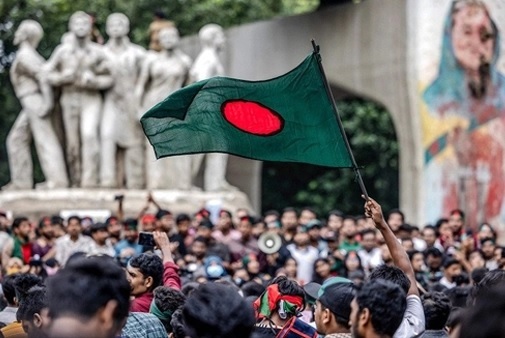
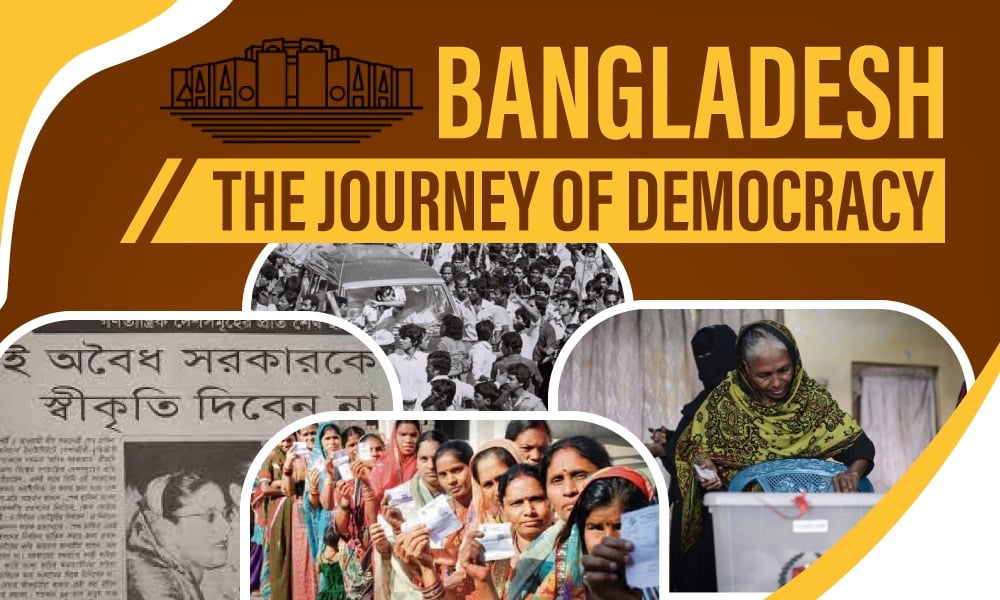

Ask your own follow-ups
Komo answers with sources. Pick up this thread in your own history and keep digging.