Shared search · Sep 13, 2026
How can Last Database support my lead qualification process?
If Last Database is your prospect or company-data platform, it can support lead qualification by helping you:
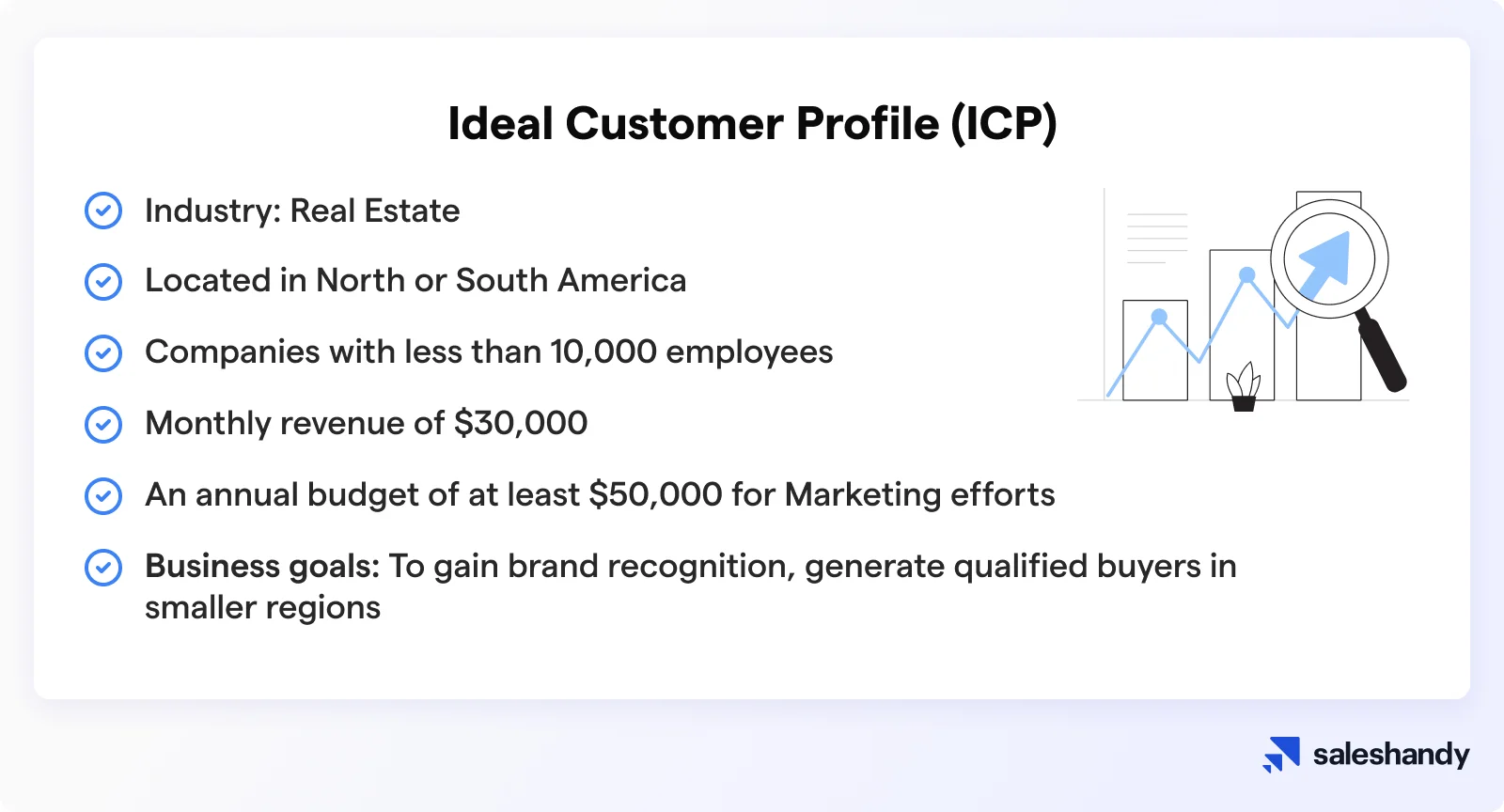
- Define your ICP: Filter leads by industry, company size, location, revenue, technology stack, or other firmographic criteria.
- Enrich lead records: Add missing job titles, company details, contact information, and buying-context data so reps qualify leads from complete records.
- Prioritize prospects: Use a scoring model based on fit, engagement, intent, authority, budget, and timing. Lead scoring and grading are commonly used to distinguish marketing-qualified leads from sales-qualified leads
4.
- Standardize qualification: Map database fields to a framework such as BANT, CHAMP, MEDDIC, or GPCT, ensuring every rep applies the same criteria
2
- Route leads automatically: Assign qualified leads to the correct salesperson based on territory, segment, account size, or product interest. Consistent routing helps prevent dropped or misassigned leads
- Separate outcomes: Label leads as sales-ready, nurture, disqualified, or recycle. Leads that fit your ICP but lack urgency or budget can remain in targeted nurture rather than being permanently discarded
7.
- Improve over time: Compare qualification scores with actual conversion and closed-won data, then adjust your filters and scoring thresholds. Scoring should reflect attributes and behaviors that correlate with conversion in your own data
3.
A practical setup would be:
- Create an ICP filter in Last Database.
- Add required qualification fields—need, authority, timing, budget, use case, and engagement.
- Assign scores and define an MQL/SQL threshold.
- Sync or export qualified records to your CRM.
- Track conversion by source, score, segment, and disqualification reason.
- Review the model monthly and refine it based on sales outcomes.
I can’t verify Last Database’s specific features from the available information, so the exact implementation depends on whether it provides enrichment, scoring, intent data, CRM integrations, or workflow automation.
Related
How can Last Database help my team prioritize potential accounts?
Last Database can help your team prioritize potential accounts by turning a broad prospect list into a ranked, actionable account queue:
- Filter for ICP fit: Segment accounts by industry, company size, revenue, geography, growth, technology stack, and relevant decision-maker roles. These firmographic and technographic criteria form the foundation of account scoring
3
5.
- Combine fit with buying signals: Give higher priority to accounts that not only match your ICP but also show intent—such as researching relevant topics, hiring for related roles, visiting your site, downloading content, or engaging with campaigns. Fit alone identifies accounts that could buy; intent helps identify those more likely to buy now
1
- Identify account-level momentum: Look for multiple contacts from the same company engaging with your team or content. Several active stakeholders can indicate a developing buying group and justify coordinated outreach
- Create account tiers: For example:
- Tier 1: Strong ICP fit, high intent, and active engagement—use personalized, multi-threaded outreach.
- Tier 2: Good fit with moderate signals—use targeted sequences and nurture.
- Tier 3: Weak or inactive fit—use automated marketing rather than intensive sales time.
- Focus reps on “why now”: A useful prioritization view should show not just an account’s score, but the trigger behind it—such as a funding event, new executive, hiring surge, technology change, or recent engagement. Prioritization is more effective when refreshed continuously rather than treated as a one-time list-building exercise
2.
- Improve sales efficiency: Route high-priority accounts to the right owner by territory, segment, or account value, then measure conversion and revenue by tier. This lets you refine the scoring model around signals that actually correlate with pipeline.
A simple model for Last Database would be:
Priority score = ICP fit + intent + engagement + relationship strength + potential account value
Your team should review the highest-scoring accounts weekly and periodically adjust the model using closed-won, closed-lost, and disqualification data. I can’t confirm which of these capabilities Last Database natively provides, so the exact setup depends on its available filters, intent data, scoring, and CRM integrations.
Related
How can Last Database support my sales qualification workflow?
Last Database can support your sales qualification workflow by giving reps a consistent way to find, assess, and advance prospects—provided it supports the relevant data and CRM features.
- Screen for ICP fit: Filter accounts and contacts by industry, company size, revenue, location, growth, technology, job title, and other criteria. Sales databases typically provide contact and company information for prospecting, while the CRM remains the system for tracking the customer lifecycle
9.
- Enrich records before outreach: Fill gaps in contact, company, role, and firmographic data so reps can assess whether a prospect is worth pursuing and personalize discovery.
- Score qualification consistently: Build a score using fit, need, authority, budget, timing, engagement, and intent—the core criteria commonly used in modern qualification frameworks
5.
- Surface buying signals: Prioritize prospects showing behaviors such as pricing-page visits, product inquiries, content engagement, hiring activity, funding, leadership changes, or other relevant company events
- Map the buying group: Identify multiple stakeholders at the same account and record each person’s role, influence, and engagement. Account-level scoring can aggregate signals across contacts to highlight stronger opportunities
- Standardize handoffs: Define clear stages such as New → MQL → Sales Accepted → SQL → Opportunity → Nurture/Disqualified, with required fields and acceptance criteria at each step. An SQL should fit the ICP, show buying intent, and meet criteria such as budget, authority, need, and timeline
12.
- Automate routing and follow-up: If integrations are available, route qualified prospects to the appropriate rep by territory, segment, or account value and trigger the correct outreach sequence. Automated enrichment, scoring, and routing can reduce delays and misassigned leads
7.
- Close the feedback loop: Track conversion, disqualification reasons, and win rates by score, segment, and source. Recalibrating scoring against closed-won data helps keep qualification tied to actual revenue outcomes
3.
A practical workflow is:
- Define your ICP and disqualifiers.
- Filter and enrich prospects in Last Database.
- Apply fit and intent scores.
- Require reps to complete qualification fields during discovery.
- Route only prospects meeting the SQL threshold to account executives.
- Review accepted, rejected, won, and lost leads monthly.
I couldn’t verify Last Database’s current product documentation or native features, so treat scoring, intent tracking, automation, and CRM sync as capabilities to confirm with the vendor rather than assumptions.
Related
How can lastdatabase.com identify accounts that match my requirements?
LastDatabase can identify accounts matching your requirements by translating your ideal customer profile (ICP) into searchable filters, then returning matching companies and contacts.
How to use it
-
Define your account criteria Specify:
- Target countries, states, cities, or regions
- Industries or business categories
- Employee-count and revenue ranges
- Technologies the company uses
- Keywords describing the company or use case
- Required seniority or decision-maker roles
LastDatabase pages indicate support for filters such as keyword, country, state, city, industry, job title, technology, employee size, revenue, and seniority
15.
-
Search at the account level Use company-profile criteria—industry, geography, size, revenue, and technology—to narrow the database to organizations that resemble your target customers. LastDatabase describes its data as searchable by country, industry, category, professional role, and other business-contact attributes
-
Find the right people within those accounts Add job-title and seniority filters to identify relevant decision-makers, such as VP of Sales, Head of Marketing, IT Director, or Procurement Manager. Available records may include business names, company information, professional email addresses, phone numbers when available, and role information
-
Combine filters to create a precise segment For example:
U.S. companies in SaaS, with 50–500 employees, using HubSpot, and containing a VP of Sales or Revenue Operations contact.
This approach is more useful than searching only for a job title because an ICP should describe the company that should buy, while the job title identifies who to contact inside it
4.
-
Review and validate the results Check the matching-record count, inspect masked records or samples, remove duplicates and existing customers, and confirm that the data is sufficiently current before purchasing or importing it. LastDatabase advertises sample records, selected-lead purchases, and database filtering on its listings
-
Export or integrate the results Qualified datasets can be used for prospecting, account-based marketing, CRM enrichment, and outreach. LastDatabase also describes API access for searching leads, filtering contacts, and connecting data with CRM or marketing workflows
Important limitation
The available information supports profile-based account discovery—firmographics, technographics, geography, keywords, and contact roles. It does not establish that LastDatabase natively provides real-time buying intent, website activity, account scoring, or predictive qualification. To prioritize accounts that are not only a fit but also actively researching a solution, combine the filtered list with your CRM, website-intent, engagement, or sales-activity data. Fit should generally be filtered first, then buying intent used for prioritization 5.
Related
How can lastdatabase.com support my account discovery process?
LastDatabase can support account discovery by turning your ideal customer profile (ICP) into a targeted company-and-contact search.
Suggested workflow
-
Define your ICP Start with the account characteristics shared by your best customers:
- Industry or category
- Country, state, and city
- Employee-count range
- Revenue range
- Technology stack
- Growth stage or business keywords
These firmographic and technographic attributes are commonly used to identify accounts that fit an ICP
5.
-
Apply account-level filters LastDatabase advertises filters for keyword, country, state, city, industry, technology, employee size, and revenue. Use several together to create a focused account segment rather than searching a broad industry list
Example:
U.S. healthcare companies with 100–1,000 employees, revenue above $25 million, and Salesforce in their technology stack. -
Discover stakeholders within each account Add job title and seniority filters to find decision-makers, influencers, and likely users—for example, CFOs, IT directors, procurement leaders, or operations managers. LastDatabase says its records can include company information, professional emails, phone data when available, industry, location, job title, and technology details
-
Prioritize and segment accounts Create tiers such as:
- Tier 1: Exact ICP match and strategic account
- Tier 2: Strong fit but lower estimated value
- Tier 3: Partial fit for automated nurture
Keep the account fit separate from the contact persona: an ICP defines which companies to pursue, while buyer personas identify whom to approach inside them
6.
-
Validate before adding to your CRM Review sample or masked records, check company websites and LinkedIn, remove existing customers and duplicates, and verify that the data is current. Some LastDatabase pages provide live inventory, sample records, selected-record purchasing, and displayed update dates
-
Export or automate the process Use the resulting account lists for prospecting, territory planning, ABM, CRM enrichment, or partner discovery. LastDatabase also describes API access for searching leads, filtering contacts, and connecting results to CRM or marketing workflows
What LastDatabase may not provide by itself
The documented capabilities primarily support fit-based discovery—firmographics, geography, technology, keywords, and contacts. The sources do not establish native real-time buying intent, website engagement, predictive account scoring, or confirmed current purchasing need. Use CRM activity, website-intent data, hiring signals, funding announcements, and research behavior to prioritize accounts after filtering them for ICP fit; intent should refine the list, not replace the ICP 1
3.
Related





Ask your own follow-ups
Komo answers with sources. Pick up this thread in your own history and keep digging.