Shared search · Sep 14, 2026
What business goals can Last Database support?
Last Database can support business goals such as:
- Improving decision-making: Centralize reliable, current data so teams can analyze performance and make faster, evidence-based decisions.
- Increasing operational efficiency: Reduce duplicate data entry, manual processes, and information silos by giving teams a shared source of truth.
- Growing revenue: Use customer, sales, and product data to identify opportunities, personalize marketing, improve conversion, and strengthen retention.
- Improving customer experience: Consolidate customer information to understand preferences, behavior, and pain points more effectively.
- Reducing costs: Track inventory, resources, workflows, and performance to identify waste and optimize operations.
- Supporting innovation and scalability: Provide a flexible data foundation for new products, services, analytics, automation, and AI initiatives.
- Managing risk and compliance: Improve data accuracy, access control, traceability, and governance.
- Measuring strategic performance: Store the metrics and reporting data needed to monitor progress against business objectives.
The exact goals depend on what Last Database refers to and which features it provides. In general, a database is most valuable when its design is tied to specific business metrics rather than simply collecting data. 6
Related
How can Last Database fit into a company's growth planning?
Last Database can fit into a company’s growth planning as the data foundation for setting targets, allocating resources, and measuring progress.
- Create a growth baseline: Consolidate customer, sales, financial, product, and operational data so leadership can establish reliable starting metrics and a shared source of truth. Fragmented or inconsistent records can otherwise lead to reporting errors and poor decisions
2.
- Track growth KPIs: Use the database to monitor metrics such as revenue, customer acquisition cost, conversion, retention, average customer value, margins, and operational capacity.
- Improve forecasting: Analyze historical performance and current trends to model hiring needs, inventory, cash flow, sales capacity, and infrastructure requirements.
- Identify expansion opportunities: Segment customers, products, regions, or channels to reveal where demand and profitability are strongest.
- Support scalable operations: Design data structures and workflows that can handle increasing transaction and data volumes without sacrificing performance or accuracy
- Coordinate departments: Connect information from CRM, finance, marketing, support, and operations so teams plan from consistent assumptions rather than isolated spreadsheets.
- Manage risk while scaling: Add data validation, access controls, backups, and governance to protect sensitive information and maintain reliable reporting. Security and data integrity are key parts of a growth-ready database strategy
1.
- Enable experimentation and innovation: A strong database foundation helps companies test ideas, iterate, and pivot more quickly
8.
A practical planning cycle would be:
- Define the company’s growth objectives.
- Map each objective to measurable KPIs.
- Identify the data required to calculate those KPIs.
- Configure Last Database as the trusted source for that data.
- Build dashboards and forecasts.
- Review results regularly and adjust strategy.
In short, Last Database should support the planning-and-measurement layer of growth—not replace the company’s strategy. Its value depends on whether the data is accurate, current, integrated, and tied to business decisions.
Related
What makes Last Database useful for business prospect research?
Last Database can be useful for business prospect research because it can turn scattered company information into a structured, searchable view of potential customers.
- Find prospects that match your ideal customer profile: Filter companies by industry, size, location, revenue, technology, or other firmographic criteria. B2B databases commonly combine company records with decision-maker details, job titles, seniority, and buying signals
5.
- Identify the right decision-makers: Link target accounts to relevant contacts so research goes beyond finding companies and helps determine whom to approach.
- Prioritize high-potential accounts: Score or rank prospects using factors such as ICP fit, business need, engagement, or purchase intent. This helps sales teams focus effort where it is most likely to matter
- Improve research quality: Use a centralized record to compare accounts, capture notes, avoid duplicate research, and maintain a consistent view across sales and marketing.
- Reveal market opportunities: Segment the database to identify underserved industries, geographic expansion areas, partner prospects, or customer lookalikes. B2B data is also used for market research and discovering new business opportunities
2.
- Support personalized outreach: Combine company context, role information, and relevant signals to tailor messages rather than sending generic campaigns.
- Keep prospect information usable: Clean, deduplicated, and regularly updated records make research more dependable and protect CRM quality
- Connect research to execution: If Last Database integrates with a CRM or marketing tools, researched accounts can move directly into qualification, outreach, and pipeline tracking. A database is most valuable when it connects to the broader go-to-market stack
The main benefit is better prospect selection: instead of asking “Who can we contact?”, the team can ask “Which accounts fit our strategy, who influences the purchase, and why is now a good time to engage?” Results still depend on data accuracy, freshness, privacy compliance, and how well the database reflects the company’s ICP.
Related
How can Last Database complement traditional market research?
Last Database can complement traditional market research by adding structured, scalable business intelligence to surveys, interviews, focus groups, and analyst reports.
- Size and segment the market: Use company records to filter businesses by industry, geography, revenue, employee count, or growth stage, helping quantify and define target segments quickly. Company databases commonly support filtering by factors such as location, size, and revenue
3.
- Validate qualitative findings: Interviews and focus groups explain why customers behave a certain way; database records can show whether those themes appear across a broader population of companies.
- Map competitors: Compare competitors’ profiles, performance, market position, leadership, and strategic direction to supplement desk research and expert interviews
- Spot trends and whitespace: Analyze companies by sector, region, performance, or technology adoption to identify growth patterns, underserved segments, and potential expansion markets
- Build a research sample: Create a more precise list of companies or decision-makers to survey or interview instead of relying only on convenience samples.
- Prioritize follow-up research: Rank segments or accounts for deeper interviews based on size, fit, growth, or other available indicators.
- Track changes over time: Revisit the same company set periodically to monitor market movement and test whether research assumptions remain valid.
- Connect insight to action: Feed findings into sales, product, partnership, and expansion planning rather than leaving them in a one-off research report.
The strongest approach is to use Last Database for breadth, filtering, benchmarking, and validation, while traditional methods provide depth, motivations, attitudes, and context. Database information should still be checked for freshness, coverage gaps, definitions, and bias before treating it as market truth.
Related
What role can lastdatabase.com play in B2B data planning?
LastDatabase can play the role of a B2B data-sourcing and segmentation layer within a broader data plan—not a complete replacement for CRM, market research, or data governance.
- Define target-account segments: Build audiences by country, industry, job title, and technology, which can help translate an ideal customer profile into usable data criteria.
1
- Supply contact and account records: Use business email lists, executive contacts, company information, phone data, and technology information to support prospecting, account mapping, and territory planning.
- Support market sizing and coverage planning: Estimate how many target companies or decision-makers exist in a segment, identify geographic gaps, and prioritize markets for sales or marketing investment.
- Enrich internal records: Compare LastDatabase records with CRM or marketing-automation data to fill missing fields, identify new contacts, and improve account-level visibility. Some LastDatabase offerings also advertise API access, which may support programmatic enrichment or workflow integration.
- Create campaign-ready audiences: Turn research criteria into lists for outbound sales, ABM, partner recruitment, event invitations, or customer-lookalike analysis. Its email-list catalog includes industry, executive-contact, job-title, and global data packages.
- Enable technology-based targeting: Technology filters can help identify companies using a relevant platform—for example, prospects that may need migration, integration, replacement, or complementary services.
- Improve planning discipline: Establish a repeatable process: define the ICP, select fields, source a sample, validate accuracy, deduplicate against the CRM, then measure response and conversion by segment.
Recommended position in the data architecture
| Planning need | LastDatabase’s potential role |
|---|---|
| ICP definition | Convert firmographic and role criteria into searchable segments |
| Market mapping | Identify companies and contacts in selected markets |
| CRM enrichment | Add or verify account and contact fields |
| Campaign execution | Produce targeted prospect lists |
| Data operations | Provide files or, where available, API-based data access |
| Governance | Must be supplemented with consent, privacy, suppression, freshness, and accuracy controls |
Treat the data as a candidate prospecting source that requires validation, not as automatically accurate or permission to contact. Before adoption, test bounce rates, duplicate rates, field completeness, update frequency, geographic coverage, licensing terms, and compliance with applicable privacy and marketing laws. The available sources describe LastDatabase’s offerings, but do not independently verify its accuracy or compliance performance.
Related
How can lastdatabase.com support a company's prospecting infrastructure?
LastDatabase.com can support a company’s prospecting infrastructure as a data-supply layer—providing the account and contact inputs that feed sales, marketing, and revenue-operations workflows.
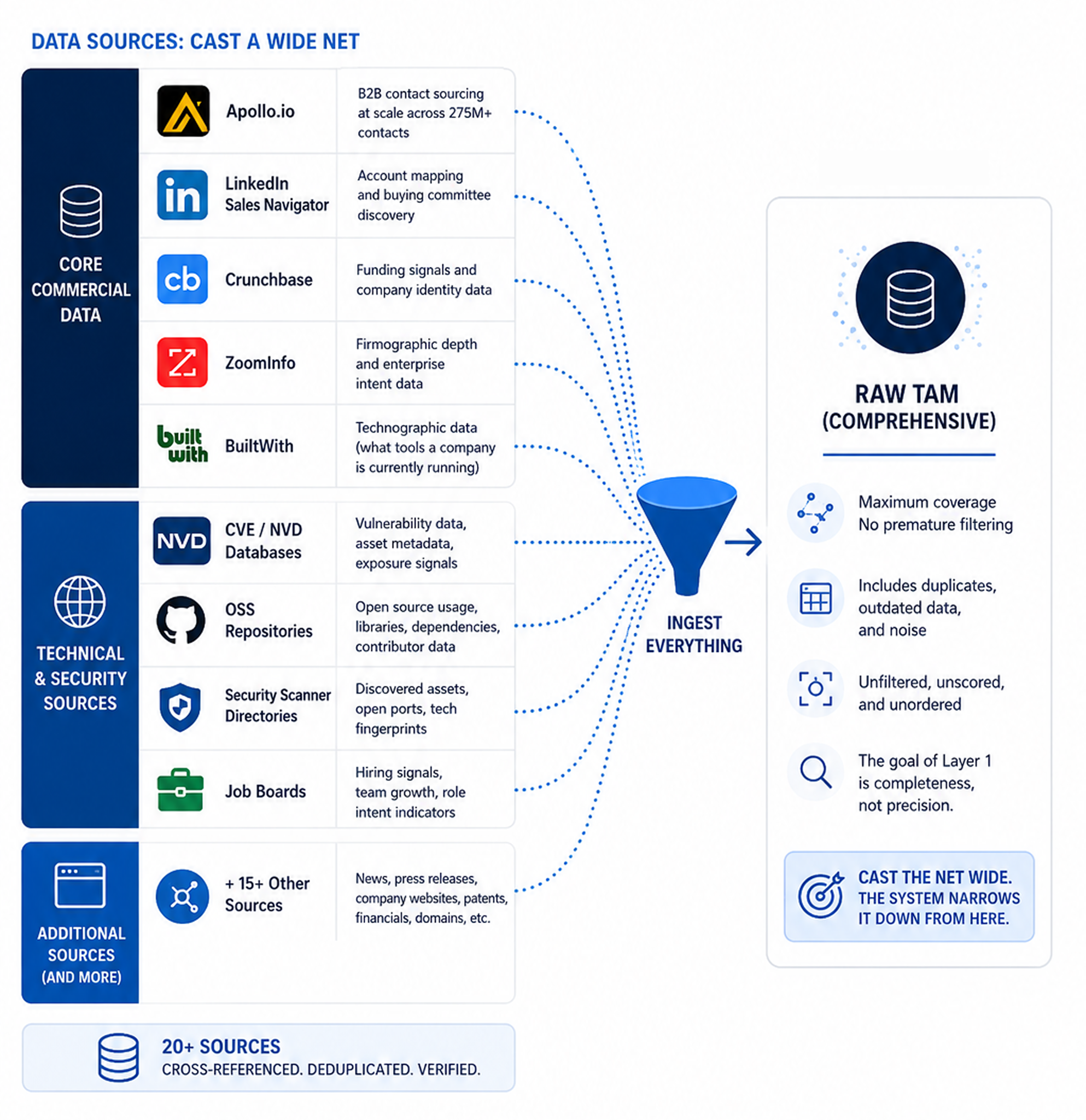
- Build targeted prospect lists: Filter or acquire records by industry, geography, company, job title, executive role, or other criteria to turn an ideal customer profile into usable account and contact lists. LastDatabase describes its datasets as including business emails, company information, industries, job titles, and decision-maker data.
- Support account-based prospecting: Identify relevant companies and map multiple stakeholders—such as executives, sales leaders, or technical contacts—rather than relying on a single lead per account.
- Enrich CRM records: Use company, phone, email, and executive-contact data to fill missing fields, identify new contacts, and improve account coverage. The site advertises API-ready datasets and API access for eligible plans.
- Feed outbound workflows: Export or pass selected records into a CRM, sales-engagement platform, or marketing system for segmentation, routing, and campaign execution. The exact integration method and supported systems should be confirmed with LastDatabase before purchase.
- Enable territory and market planning: Estimate account coverage by region or vertical, identify underpenetrated segments, and assign prospects to sales teams.
- Support specialized motions: Its catalog includes industry, country, job-title, executive-contact, technology-user, phone, and company datasets, which can be useful for vertical selling, partner recruitment, recruiting, and technology-based targeting.
- Create a repeatable data process: A practical workflow is: define the ICP → source a small sample → validate accuracy → deduplicate against the CRM → sync approved records → measure delivery, connection, meeting, and conversion rates.
Important controls: Treat the data as a prospecting input, not automatically verified truth. Test bounce rates, duplicate rates, field completeness, freshness, geographic coverage, opt-out handling, licensing, and applicable privacy and email-marketing requirements. LastDatabase’s pages advertise AI-assisted and human-reviewed updates, but independent accuracy and compliance performance should be validated using your own sample. 12
Related




Ask your own follow-ups
Komo answers with sources. Pick up this thread in your own history and keep digging.