Shared search · Sep 9, 2026
How do I trace the lineage and flow of data across systems?
To trace data lineage across systems, build a continuously updated map of where data originates, how it moves, how it changes, and where it is consumed. Data lineage should cover both technical flows and business meaning. 2
A practical approach
-
Define the scope
- Start with a critical dataset, report, KPI, or sensitive data element.
- Decide whether you need:
- Table-level lineage: systems, tables, files, dashboards
- Column-level lineage: fields and transformations
- End-to-end lineage: source through final consumer
- Business lineage: business terms, owners, policies
-
Inventory all systems and data assets Catalog databases, SaaS applications, APIs, event streams, files, ETL/ELT jobs, warehouses, BI dashboards, ML models, and downstream applications.
-
Capture metadata at every handoff Record:
- Source and destination
- Dataset, table, and column names
- Pipeline or job responsible
- Transformation logic—joins, filters, aggregations, masking, and renaming
- Run time, version, and status
- Owner, sensitivity classification, and quality information
Metadata is the foundation for connecting flows across cloud and on-premises systems.
2
-
Instrument pipelines rather than relying only on diagrams Collect lineage from:
- SQL query parsing
- ETL/ELT orchestration logs
- Database audit logs
- API and message metadata
- BI and semantic-layer definitions
- Data catalog integrations
- Application code or OpenLineage-compatible events
Manual diagrams are useful for initial orientation but become outdated quickly; automated collection can keep lineage current.
3
-
Represent the flow as a graph Model:
- Nodes: sources, tables, columns, pipelines, reports, models, and applications
- Edges: reads, writes, transforms, publishes, or depends on
This lets you perform:
- Backward tracing: “Where did this dashboard number come from?”
- Forward tracing: “What breaks if I change this column?”
- Impact analysis: identify downstream reports, models, and applications
- Sensitive-data tracing: follow PII or regulated data across boundaries
-
Reconcile and validate Compare discovered lineage with:
- Actual query and job execution
- Row counts and schema changes
- Pipeline run history
- Data-quality tests
- Owners’ confirmations
Mark lineage as observed, inferred, or manually documented so users know how trustworthy each connection is.
-
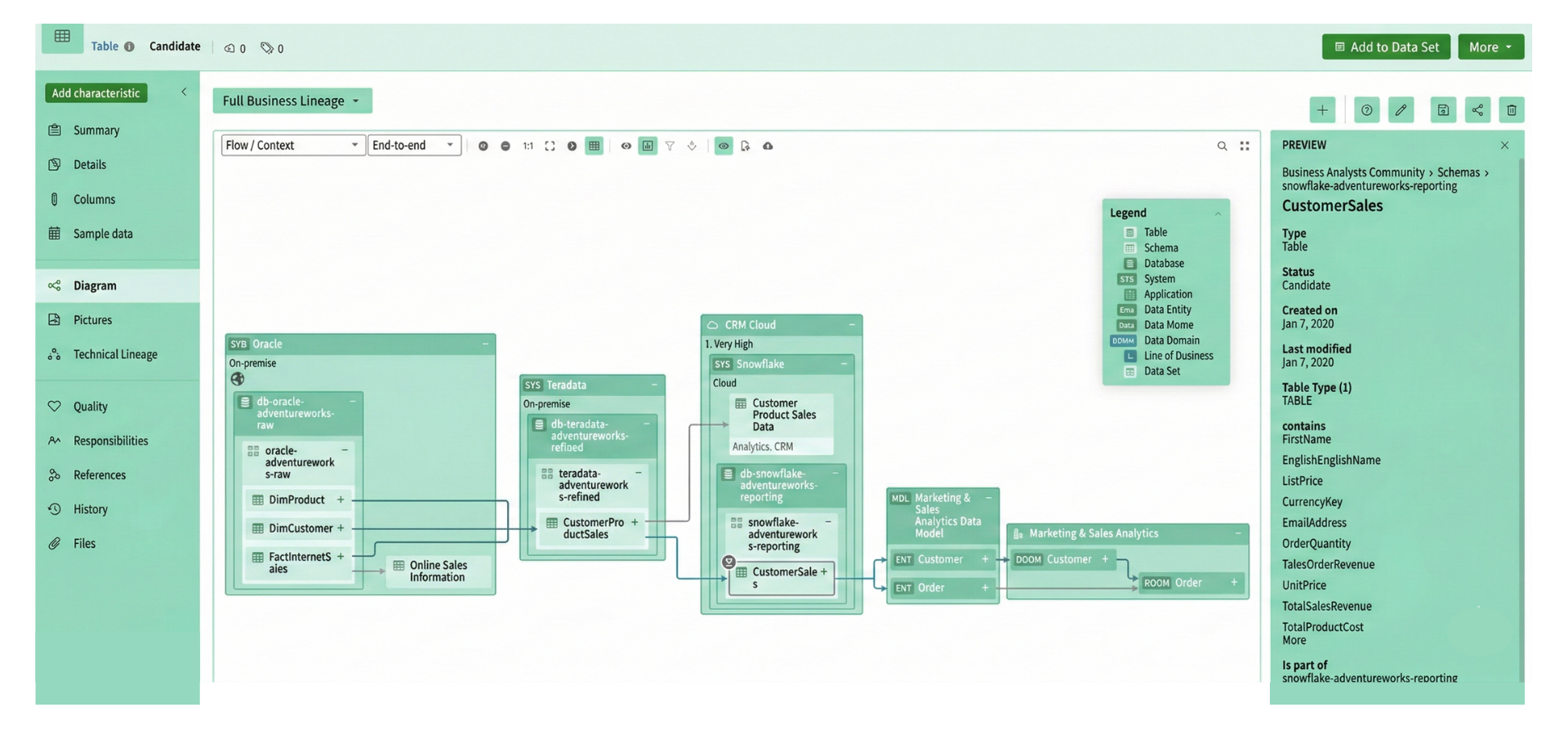
Expose it through a searchable catalog Users should be able to select an asset and see:
- Upstream and downstream dependencies
- Transformation details
- Owners and stewards
- Data classifications
- Quality status
- Last refresh and pipeline health
- Related business terms and policies
Example
1CRM.customer.email2 → CDC stream3 → raw_customer.email4 → standardization job5 → curated_customer.email_hash6 → customer_360 view7 → marketing dashboard8 → campaign platform
At the column level, document the transformation:
1raw_customer.email2 → lowercase(trim(email))3 → SHA-256 hash4 → curated_customer.email_hash
This makes it possible to answer both “Where did this value come from?” and “Where is this personal data being used?”
Recommended operating model
- Establish naming conventions and unique asset identifiers.
- Assign an owner to every important dataset and pipeline.
- Capture lineage in CI/CD when SQL or pipeline code changes.
- Monitor for undocumented or broken flows.
- Version lineage as schemas and transformations evolve.
- Start with high-value domains instead of attempting the entire enterprise at once.
- Combine technical lineage with business definitions; a map of tables alone does not explain what a metric means.
Lineage is especially useful for debugging, compliance, data-quality investigations, migration planning, and assessing the impact of schema changes. 1
2
Related
How can I verify the credibility and authenticity of a data source?
Verify a data source using two separate tests:
- Credibility: Is the source competent, independent, and suitable for the question?
- Authenticity: Is the data genuinely from the claimed source and unchanged or properly documented?
Verification checklist
-
Identify the origin
- Record the creator, organization, collection method, publication date, geographic scope, and intended purpose.
- Prefer sources with clear ownership, methodology, contact information, and version history.
- For organizational data, confirm the source system and responsible data owner.
-
Check provenance and chain of custody
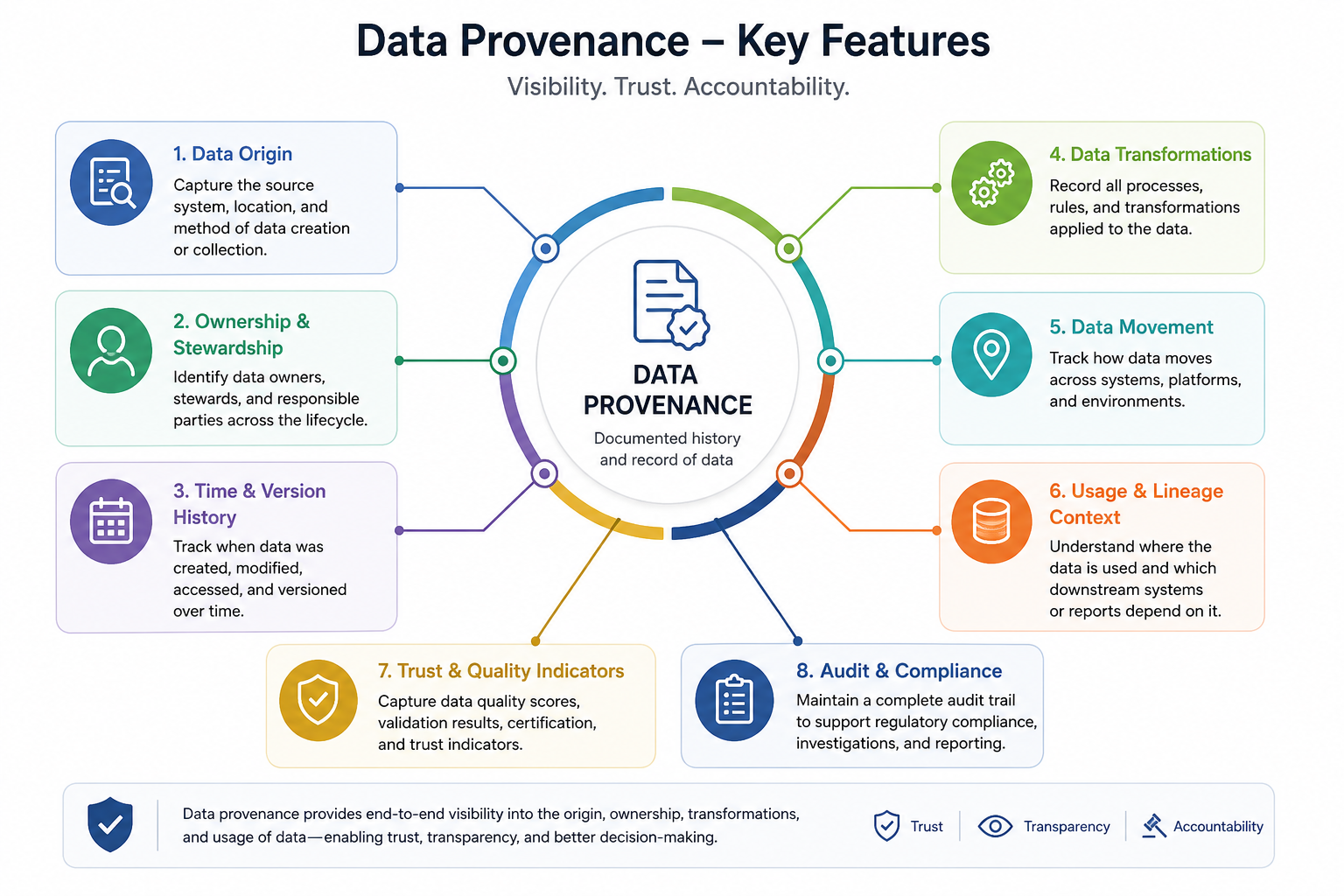
- Document where the data began, who handled it, which systems processed it, and what transformations occurred.
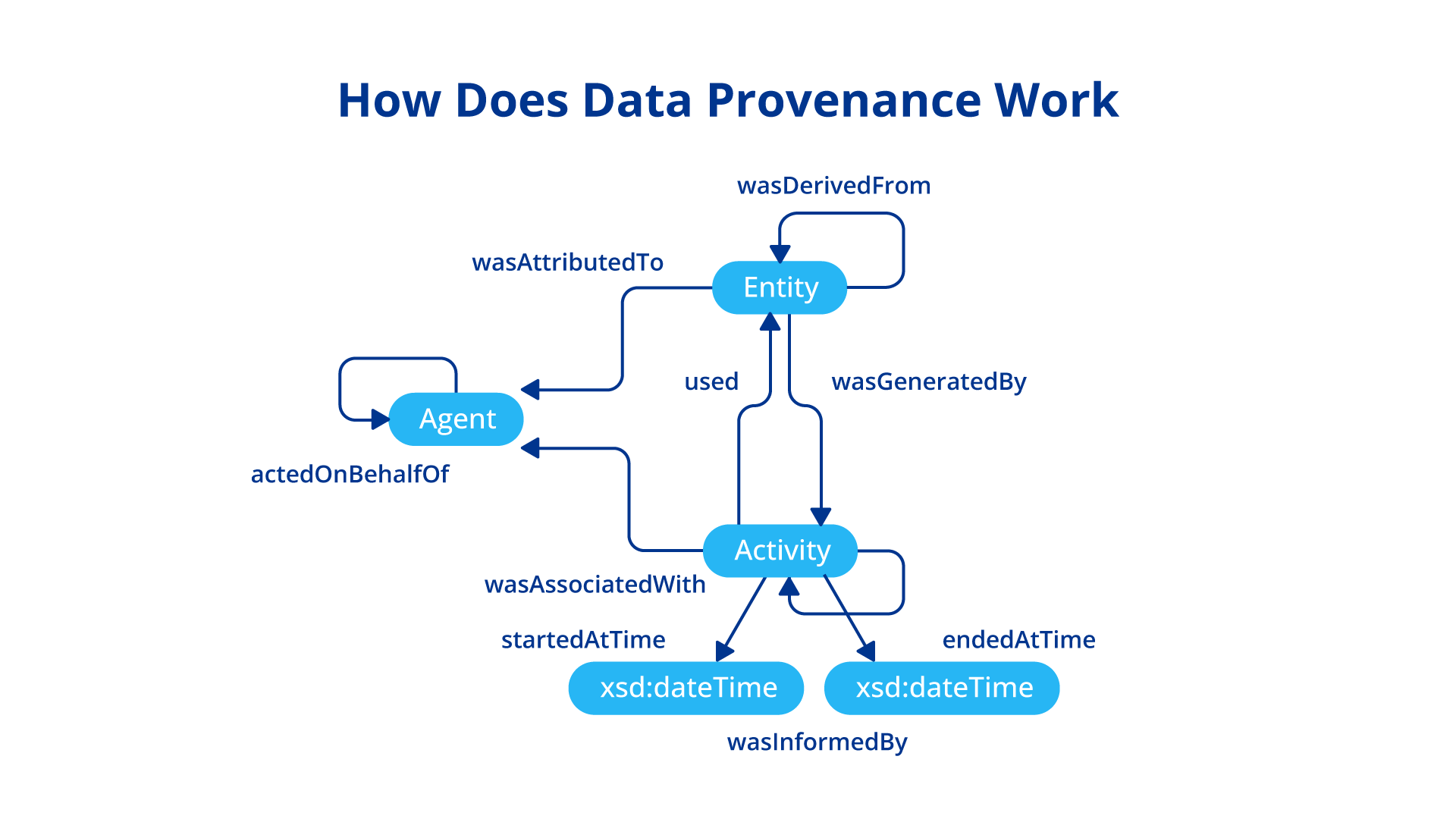
- Capture timestamps, pipeline versions, access records, and modification history. Data provenance specifically provides historical context about a dataset’s origin, changes, and handlers, helping validate and audit it.
3
- Treat a complete lineage record as evidence of traceability—not automatic proof that the original data was truthful.
-
Authenticate the files or records
- Verify digital signatures, certificates, signed API responses, or trusted repository records.
- Compare cryptographic hashes, such as SHA-256, with a trusted publisher’s hash.
- Check immutable or append-only logs where appropriate.
- Confirm that URLs, domains, API endpoints, and certificates belong to the claimed organization.
- Preserve the original file and metadata before analysis.
-
Evaluate the methodology Ask:
- How were observations sampled?
- Are definitions and units documented?
- Is missing data explained?
- Could the collection process introduce bias?
- Are revisions and corrections disclosed?
- Can an independent party reproduce the result?
-
Test data quality Run checks for:
- Completeness and duplicate records
- Valid ranges and formats
- Referential integrity
- Unexpected gaps or spikes
- Timestamp consistency
- Schema changes
- Outliers and impossible values
Compare important fields against an independent, authoritative source. Traceability helps verify accuracy and integrity, whereas lineage primarily shows how data moved and changed.
5
-
Cross-check claims
- Compare the data with independent sources using the same definitions and time period.
- Investigate material discrepancies rather than averaging conflicting values.
- Look for corroborating official publications, peer-reviewed research, regulatory filings, or primary records.
-
Assess fitness for purpose A credible source may still be unsuitable—for example, a national annual dataset may not support a real-time operational decision. Record:
- Intended use
- Coverage and granularity
- Freshness
- Known limitations
- Accuracy requirements
- Privacy and legal constraints
A useful evidence record
| Field | Example |
|---|---|
| Source and owner | Government API, statistics department |
| Collection method | Survey, sensor, transaction system |
| Version and timestamp | v3.2, collected 2026-08-31 |
| Transformation history | Deduplicated, normalized, aggregated |
| Integrity evidence | SHA-256 hash, signed release |
| Quality results | 99.8% complete; 0.2% invalid records |
| Independent comparison | Matches reference dataset within 1.1% |
| Limitations | Revised monthly; excludes private providers |
| Decision | Approved for quarterly reporting |
Red flags
- No identifiable owner or methodology
- Data supplied only as screenshots or unexplained extracts
- Broken or incomplete provenance
- Inconsistent timestamps, units, or definitions
- Suspiciously perfect results
- Undocumented manual edits
- Hash or signature mismatch
- Source relies on anonymous claims without primary evidence
- Data is old, revised, or out of scope for the decision
A strong verification process combines source evaluation, provenance, cryptographic or access-based authentication, quality testing, and independent corroboration. Provenance tools can record metadata and transformations, while cryptographic hashes can help detect whether data changed after publication. 3
8
Related



Ask your own follow-ups
Komo answers with sources. Pick up this thread in your own history and keep digging.