Shared search · Sep 14, 2026
How can Last Database assist with identifying opportunities in developing territories?
If by “Last Database” you mean your latest or existing business database, it can help identify opportunities in developing territories by:
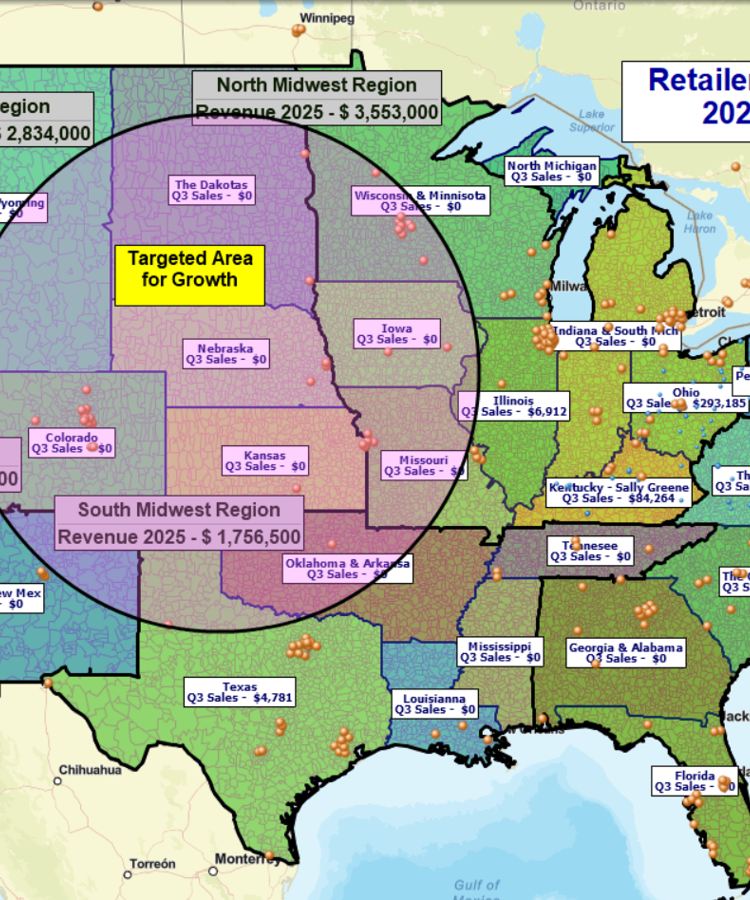
- Mapping market potential: Combine location, population, income, industry, infrastructure, and demand data to find underserved regions.
- Comparing territories: Standardized cross-country data makes it easier to benchmark regions and identify places with favorable growth trends or unmet needs
4.
- Finding and prioritizing prospects: Filter organizations or customers by geography, sector, size, purchasing signals, and current coverage to create targeted lead lists.
- Detecting emerging trends: Historical and high-frequency data can reveal changes in spending, mobility, demographics, or economic activity before they appear in conventional reports
5.
- Identifying gaps: Compare existing sales or service coverage with the size and needs of each territory to uncover white-space opportunities.
- Supporting territory planning: Score territories by market size, growth, competition, accessibility, and risk, then allocate sales, distribution, or investment resources accordingly.
- Validating decisions: Cross-check database findings against public sources such as World Bank, FAO, UN, or trade data; data gaps and revisions should be considered before acting
A practical workflow is: collect → clean and geocode → segment territories → score opportunity → validate locally → pilot → monitor results. The database should support decisions, not replace local research, since developing territories may have incomplete or outdated data.
Related
Can Last Database support regional sales expansion research?
Yes—if “Last Database” contains customer, prospect, sales, product, and location data, it can support regional sales-expansion research by helping you:
- Compare regions by current revenue, customer count, growth, industry mix, and buying behavior.
- Identify whitespace—areas with many potential customers but little or no sales coverage.
- Prioritize territories using market potential, account value, competition, and accessibility.
- Segment prospects geographically so sales teams can focus on the most relevant industries or customer profiles.
- Plan territory assignments and routes, reducing overlap and improving coverage; territory mapping is specifically used to align geographic areas with market potential and sales resources
3.
- Measure expansion results by comparing leads, conversion rates, revenue, and retention across regions.
A useful research process is:
- Clean and geocode the database.
- Group accounts by region, industry, size, and customer status.
- Calculate penetration, revenue potential, and growth indicators.
- Map underserved areas and high-value prospects.
- Validate results with local market, regulatory, competitor, and economic research.
- Pilot one or two promising regions and track performance.
Regional segmentation can reveal opportunities and help tailor marketing and distribution strategies in underpenetrated areas 7. However, the search results do not identify a specific product or service called “Last Database,” so its exact capabilities depend on the fields, geographic coverage, update frequency, and analytical tools it provides.
Related
How can companies use Last Database when planning territory growth?
Companies can use Last Database as a central source for evaluating and planning territory growth—assuming it contains geographic, customer, prospect, sales, and market data.
Practical uses
- Locate expansion opportunities: Identify regions with many potential accounts, strong demand, or limited existing coverage.
- Measure market penetration: Compare current customers and revenue with the total addressable market in each region.
- Segment territories: Group accounts by geography, industry, company size, buying signals, or customer value—not geography alone. Modern territory planning commonly combines firmographic data, intent, lifetime value, and routing efficiency
2.
- Balance sales coverage: Assign territories according to opportunity, workload, rep capacity, and expertise to avoid overloaded teams or duplicated coverage
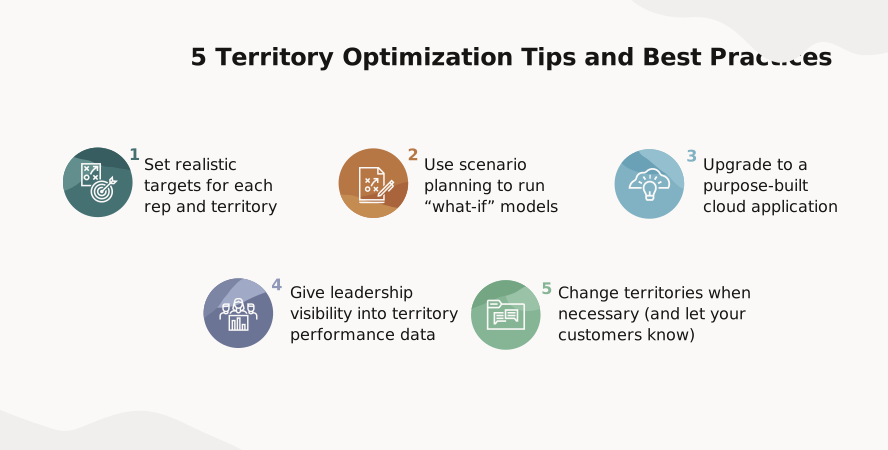
- Set realistic targets: Use regional historical performance, account potential, conversion rates, and pipeline to establish quotas and hiring needs.
- Plan market entry: Rank new regions by opportunity, competition, travel or service costs, regulatory complexity, and operational readiness.
- Track growth continuously: Monitor pipeline, win rate, revenue, retention, and coverage by territory, then rebalance as conditions change. Territory management is increasingly treated as an ongoing process rather than a fixed annual exercise
1.
- Test expansion decisions: Run scenarios such as “What if we add two representatives?” or “What if this region is divided by industry rather than geography?” before committing resources.
A useful process is:
- Clean, deduplicate, and geocode the database.
- Define the market and territory-level goals.
- Calculate penetration and whitespace.
- Score and rank territories.
- Assign accounts and resources.
- Pilot the highest-priority region.
- Review results quarterly and adjust boundaries or targets.
The database should be validated with local competitor, economic, regulatory, and customer research. Its value depends on the accuracy, geographic coverage, and update frequency of the underlying data.
Related




Ask your own follow-ups
Komo answers with sources. Pick up this thread in your own history and keep digging.