Shared search · Sep 14, 2026
What can companies learn by mapping potential business accounts?
Mapping potential business accounts can help companies understand:
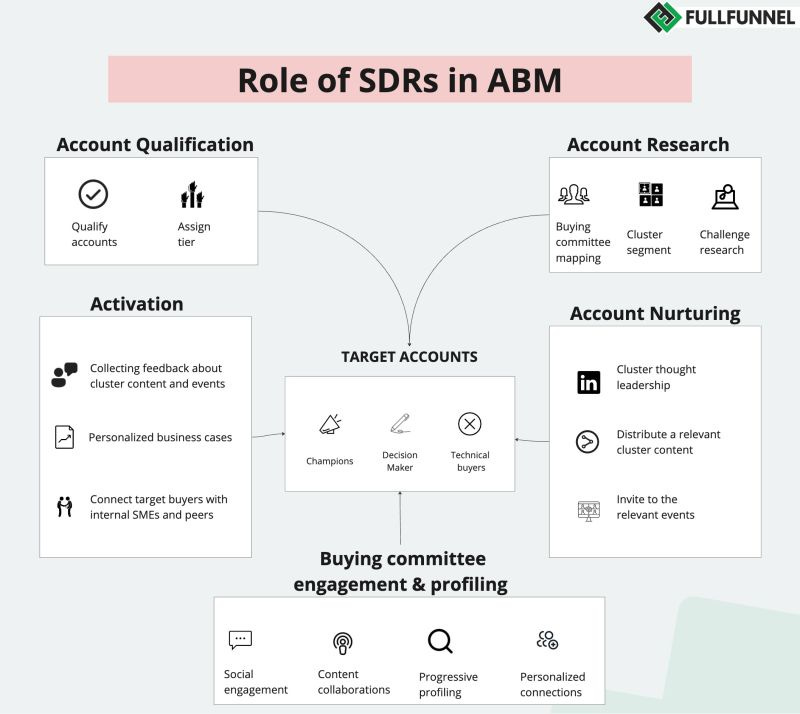
- Who makes and influences buying decisions—including decision-makers, champions, detractors, technical evaluators, and budget owners—not just formal executives.
1
2
- How the organization actually makes decisions, including informal influence networks and internal relationships that may not appear on an org chart.
3
- Which stakeholders need different messages, allowing sales and marketing to tailor outreach to each person’s priorities, pain points, and role.
- The best route into the account, such as warm introductions, internal champions, or departments with the strongest need.
- Deal risks and potential blockers, including skeptics, competing vendors, weak relationships, or overreliance on a single contact.
- How to coordinate internally, giving sales, marketing, customer success, and leadership a shared view of the account.
- Where expansion opportunities may exist, by revealing additional departments, use cases, subsidiaries, or stakeholders worth engaging.
- Which accounts deserve investment, helping teams prioritize high-potential prospects rather than treating every lead alike.
In short, account mapping turns a list of companies and contacts into a picture of buying dynamics, relationship strength, opportunity, and risk—supporting more focused and resilient account strategies.
Related
How can Last Database assist with opportunity landscape research?
Can lastdatabase.com help businesses map potential commercial opportunities?
Yes. LastDatabase.com can help businesses map potential commercial opportunities by turning a broad market into structured lists of companies and relevant contacts.
How it can help
- Define target segments: Filter prospects by country, industry, job title, seniority, department, and company characteristics to identify markets that fit a particular product or service.
1
- Build account lists: Create lists of potential customers, partners, suppliers, distributors, or commercial-property owners. Its data hub includes company records, industry databases, country databases, technology-user data, and contact lists.
- Map buying committees: Find multiple relevant roles—such as executives, finance leaders, technology teams, HR, sales, and operations—rather than relying on one contact per company.
- Identify geographic opportunities: Compare the number and type of potential accounts across countries, regions, or cities to support territory planning and market prioritization.
- Discover niche opportunities: Use specialized datasets, such as commercial-property-owner records, to investigate vertical or asset-specific opportunities.
- Support outreach and validation: Use business emails, phone numbers, company websites, addresses, and related firmographic information to research and contact shortlisted accounts.
What it does not replace
LastDatabase is primarily a prospecting and contact-data resource, not a complete opportunity-landscape study. It may help answer “Which organizations and people should we investigate?”, but businesses should add external research to determine:
- market size and growth;
- customer need and buying intent;
- competitors and alternatives;
- regulatory or procurement barriers;
- account fit, financial capacity, and timing.
Data should also be checked for recency, accuracy, consent, and applicable privacy/marketing laws before use. The site describes its datasets as covering many categories and offering custom requests, but that alone does not establish that every record is current or independently verified. 18
21
Bottom line: LastDatabase can provide the account and contact layer of commercial opportunity mapping—helping companies discover, segment, prioritize, and reach potential accounts—while strategic market analysis is still needed to confirm which opportunities are genuinely attractive.
Related
How can lastdatabase.com organize opportunities across different markets?
LastDatabase.com can organize opportunities across markets by creating a consistent segmentation framework for companies and contacts, then comparing the resulting groups.
Practical approach
-
Segment by geography
Build separate lists for countries, regions, or cities to compare market coverage and identify priority territories. The site presents country- and location-specific business data, including country-focused and USA-focused lists. -
Segment by industry
Group prospects into sectors such as finance, healthcare, software, manufacturing, retail, and construction—the types of commercial sectors used in its industry directory. -
Add account and contact criteria
Refine each market by company type, job title, department, seniority, and contact details so the same targeting logic can be applied across countries. LastDatabase describes its offering as including B2B email lists, phone data, company contacts, industry databases, and API-powered lead-generation tools. -
Create a market-opportunity matrix
Export or compile each segment into a table such as:Market Industry Target accounts Key roles Priority Next action Germany Manufacturing 500 Operations, procurement High Validate top 50 Canada Software 320 CTO, finance Medium Research use cases UAE Construction 180 Projects, commercial High Identify partners -
Prioritize markets
Rank each segment using additional criteria—such as account volume, strategic fit, estimated demand, competition, regulatory complexity, and expected sales value. LastDatabase can supply the underlying company and contact records, but those business-priority assessments require CRM data, market research, or internal analysis. -
Use consistent data across channels
Its API and data-list positioning may support integrating market segments into lead-generation workflows, although the specific export, API, deduplication, and CRM capabilities should be confirmed with LastDatabase before purchase.
Important limitation
LastDatabase is best viewed as a source for organizing and discovering target accounts, rather than a complete market-intelligence or opportunity-management platform. The lists can show where potential prospects are, but they do not by themselves prove market attractiveness, buying intent, budget, or competitive whitespace. Validate records for accuracy, recency, consent, and applicable privacy laws before outreach.
Related
What role can lastdatabase.com play in opportunity discovery research?
LastDatabase.com can serve as the data-gathering and prospect-identification layer of opportunity discovery research—not as a complete market-research or strategy platform.
Its role
- Find potential organizations: Search company records by industry, country, location, and other business attributes to identify markets or account pools worth investigating. Its data hub includes industry databases, country databases, company records, and technology-user data.
- Identify relevant decision-makers: Locate executives, job-title groups, and business contacts associated with target organizations.
- Reveal adjacent opportunities: Explore related industries, technologies, geographies, or company types that may represent new customer, partner, supplier, or channel segments.
- Build research samples: Create a structured set of companies for interviews, surveys, competitor comparisons, or initial outreach. Segmentation helps organize contacts into groups and make targeting more precise.
3
- Enrich opportunity hypotheses: Lead records may provide context such as a company, location, and industry segment, helping researchers decide whether an account merits further investigation.
- Feed downstream workflows: The platform describes some datasets as API-ready, which could allow prospect data to flow into a CRM, spreadsheet, analytics environment, or lead-generation process.
Example research workflow
- Define a hypothesis—for example, “mid-sized manufacturers in Germany may need a new logistics solution.”
- Filter LastDatabase records by geography, industry, company type, and relevant job titles.
- Group the results by market, segment, or account size.
- Rank accounts using external criteria such as growth, spending power, urgency, competition, and strategic fit.
- Validate the strongest opportunities through interviews, company websites, public filings, industry reports, and direct research.
- Move validated accounts into a CRM or outreach workflow.
Key limitation
LastDatabase can indicate where potential opportunities and relevant contacts may be, but its records do not by themselves demonstrate market demand, purchasing intent, budget, or commercial viability. Those conclusions require additional primary and secondary research; market-research data is typically used to study market size, competitors, customer behavior, and industry dynamics. 1
In short: LastDatabase.com helps researchers move from a broad opportunity idea to a searchable, segmented list of organizations and contacts that can then be validated and prioritized.
Related



Ask your own follow-ups
Komo answers with sources. Pick up this thread in your own history and keep digging.